


Botswana prioritises HIVAIDS prevention and treatment
18 May 2025
Botswana continues to prioritise HIV prevention and treatment programmes among marginalised members of the society, such as the key and vulnerable populations.
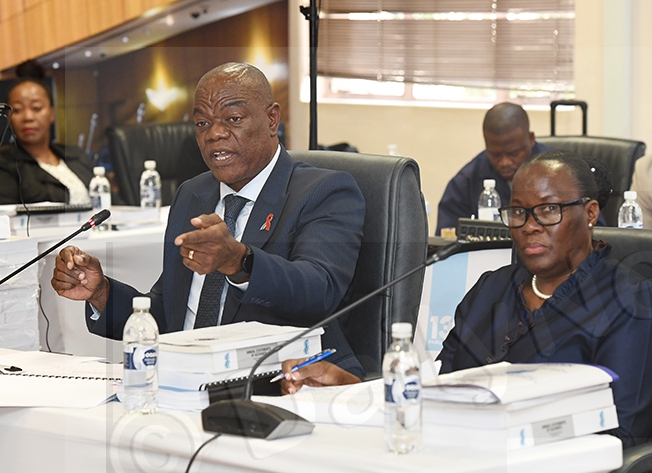
This was said by the National AIDS and Health Promotion Agency (NAHPA) coordinator, Mr Ontiretse Letlhare when giving progress on the country’s HIV/AIDS response for the financial year ending March 31, 2022, before the 61st Public Accounts Committee (PAC) in Gaborone on Friday.
“We have noted that stigma and discrimination exist among these populations, hence the targeted interventions which include working closely with the civil society organisations which place the interest of these populations at the forefront,” he said.
In Botswana, Mr Letlhare further said the use of tobacco, physical inactivity, excessive alcohol use and unhealthy eating habits had been sighted as factors that rendered people susceptible to Non-communicable Diseases (NCDs).
“To close this gap, government through NAHPA, has resorted to investing in health promotion interventions through partnerships and providing funding for organisations and entities that focus on physical activities such as marathons, walks and hikes,” he said.
Other interventions, he said included health talks and availing of health screening with associated referrals to health facilities for those showing signs of NCDs, adding that the activities were mostly done by partner civil society organisations. NAHPA, in collaboration with the Ministry of Health, Mr Letlhare said, had developed the NCD investment case which gave an economic analysis of the case for investing in prevention and control of NCDs.
In terms of the utilisation of the warranted provision for the year under review, the NAHPA coordinator said the agency was warranted a total of P51 770 995 million and P156 970 917 million for the recurrent and development expenditure, respectively. As at March 31, 2022, he said the recurrent expenditure stood cumulatively at 98 per cent, whilst the development expenditure was at 91 per cent of the warranted provision for financial year 2021/2022.
To ensure improved absorption of warranted provisions in subsequent years, as well as to address the visible problem of absorption, under the development budget, which he said was predominantly COVID-19 induced, Mr Letlhare said interventions involving stepping up implementation and monitoring of programmes had been put in place. Further, the coordinator expressed concern that behaviour change at individual level was still low and inadequate to fully match current challenges brought about by HIV and NCDs.
These challenges, he said included stigma and discrimination targeted at people living with HIV, key and vulnerable populations such as people living with disabilities, people involved in sex work and men who have sex with other men.
“Such discrimination impedes access to HIV prevention, treatment, care and support services to the affected people,” he said.
Other challenges, which are a cause for concern, Mr Letlhare said were the low risk perception, especially by the youth, gender based violence, poor health seeking behaviour among men, intergenerational sexual relations as well as alcohol and substance abuse. Therefore, to address the challenges, he said the agency continued to partner with civil society and faith based organisations to deliver health talks, conduct the necessary screenings for NCDs and HIV testing, through the Social Contracting Mechanism.
The other emerging challenge, he said related to the question of the long term sustainability of funding for the two epidemics of HIV and NCDs, which had become more apparent, especially in view of signals received from the country’s major funders, being the Global Fund and PEPFAR ‘that they will transition their support to Botswana on account that the country has attained an upper-middle income status’. Through the support of UNAIDS, Mr Letlhare said NAHPA had successfully completed an assessment of the country’s readiness to transition its national AIDS response from external donor funding to domestic funding, in responding to the signal.
“This transition readiness assessment has led to the development of a sustainability plan or roadmap, which is about to be disseminated to stakeholders for their appreciation and implementation,” he added. ENDS
Source : BOPA
Author : Lorato Gaofise
Location : Gaborone
Event : Public Accounts Committee
Date : 18 May 2025
Related News

14 Oct 2026
Mophuting pays tribute to Masire
14 Oct 2026