


Abandoned mine shafts put community at risk
08 May 2025
Diamonds may have propelled Botswana to middle-income status, but for Francistown, gold seems to have laid a different and more profound foundation.
Decades after the Monarch Gold Mine’s closure, the very ground beneath the city’s feet is showing signs of instability, raising a terrifying possibility that Francistown may be sitting atop a network of dangerous mine shafts and channels, a ticking time bomb waiting to explode.
The city’s history is intertwined with gold. Founded in the late 19th century by Cecil John Rhodes and named after British diplomat, Dennis Francis, Francistown was born from the gold rush in the Monarch area.
But while the diamond boom transformed Botswana, the gold rush’s legacy now casts a shadow of fear over the modern city.
This is not a new worry. Reports have surfaced for years about potential instability. The Nyangabwe Referral Hospital, the largest in northern Botswana, was once suggested to be situated atop these channels.
Now, residents are pointing to more alarming evidence. Areas like Block 9 and 10 and even areas near the Tachila and Rainbow mines are implicated.
Local accounts suggest that the mine channels extend far beyond the immediate area, posing a serious threat if the surface is disturbed.
One striking example emerged during a recent emergency kgotla meeting where a Monarch resident, Mr Dozen Mogochwa recounted his late father’s warnings of extensive underground channels, extending far beyond the mine site, even suggesting the potential for these channels running beneath the city itself.
Another resident, Mr Mbizo Madafini corroborated these fears, recounting his experience of hearing mining activity beneath his home, further highlighting the potential for extensive and undiscovered underground networks.
Other residents also echoed similar tales of unseen tunnels and cavities beneath their homes, stories that leave everyone puzzled, yet deeply concerned.
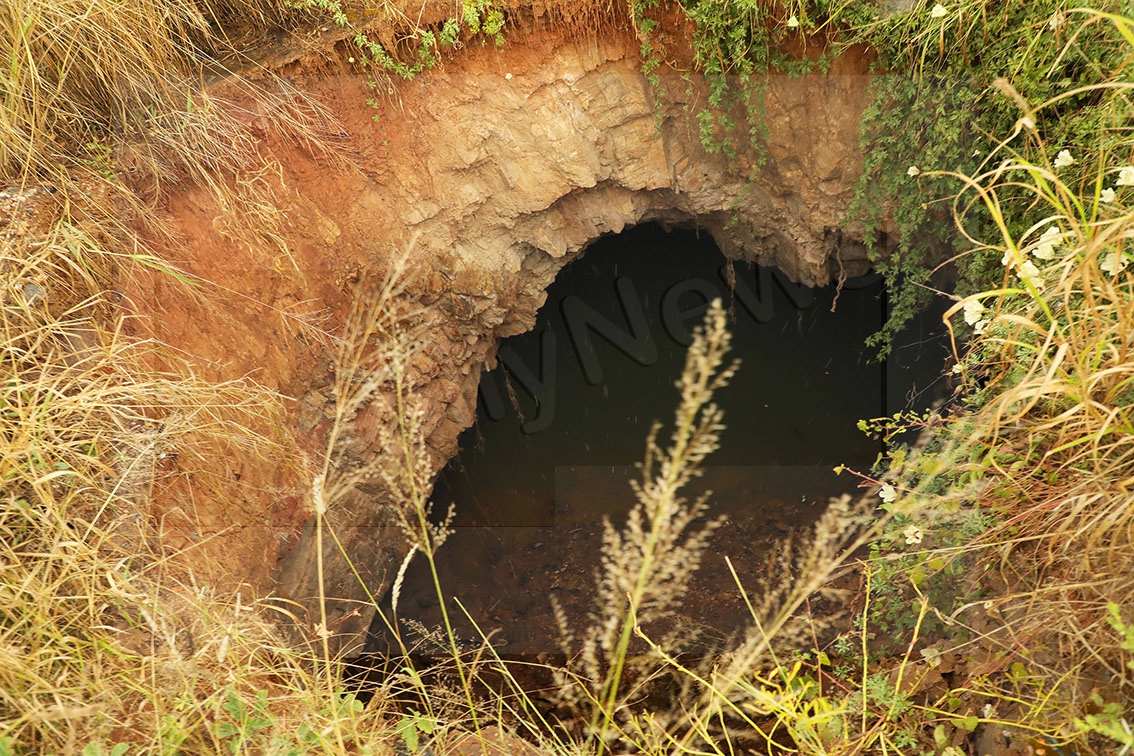
The recent subsidence at the old Monarch Gold Mine site is the latest and most alarming development. A gaping hole, of currently unknown depth, potentially linked to old mine workings, has appeared near a busy walkway, highlighting the urgent need for investigation and preventative measures.
This raises a crucial question: How deep does the hidden danger extend? Are there more shafts and tunnels lurking beneath the city’s streets, homes, and businesses? How extensive is the network of old mine channels?
During the emergency meeting, the MP for Francistown West, Mr Ignatius Moswaane warned and declared that anyone who falls in would not be retrieved as it iwas simply too dangerous.
In an interview, Chief Engineer at the Department of Mines in Francistown, Mr Tshepiso Moremedi emphasised the need for a comprehensive investigation because the recent discovery underscored the potential for more undiscovered openings beneath the city. He confirmed that the new shaft had not been detected during the 2022 mine rehabilitation and attributed the new discovery to the inherent challenges of mine closure and rehabilitation, emphasising the possibility of further shafts beneath or near buildings.
“We suspect that there are more shafts that remain uncovered and this calls for further research,” said Mr Moremedi.
He explained that the situation was compounded by the potential of further subsidence, the difficulty in identifying hidden tunnels, and the challenges posed by the need for thorough investigations.
“The immediate need is for a thorough geotechnical investigation, encompassing the entire urban area and encompassing the whole of the area, to fully assess the extent of the underground network,” he added.
The findings would determine the urgent and potentially costly remediation required to protect the city and its citizens.
However, he explained that rehabilitating an abandoned old mine was expensive and required expertise. Mr Moremedi said underground water could also accumulate, as it was the case with the new hole, creating flood areas that were dangerous and could lead to drowning.
He said currently, temporary barricades of branches would be put whilst at the same time deploying security personnel to enforce the closure.
Also, Moremedi said a team of mine experts would conduct a thorough investigation to determine the extent of the hidden danger. Some quarters are suggesting a concept of an underground city in Francistown, using existing mine tunnels and channels as captivating.
However, the overall cost of transforming abandoned mine tunnels and channels into a habitable city would likely be astronomical because existing mines were not designed with habitability in mind.
This would need significant financial investment, potentially involving private and public partnership.
Meanwhile, Assistant Commissioner of Police-CID North, Mr Maikaelelo Chepete recounted a woman’s quick thinking and knowledge of the treacherous terrain that allowed her to outsmart her attackers.
Facing two assailants, he said the woman did not rely on strength or direct confrontation. Instead, he explained, the woman used her intimate familiarity with the abandoned mines’ dangerous landscape to her advantage.
As they persuaded her, she led them towards a particular hazardous trench, a trap she knew well and her escape was a calculated manoeuvre.
By luring them into the concealed danger, she forced them to swallow their pride and the duo plummeted into the unforgiving depths of the mine, and were never recovered until to date.
Mr Chepete’s story paints a grim picture of the abandoned gold mines, highlighting not only the physical dangers of the deep and treacherous trenches but also the moral darkness they have concealed.
The revelation that some women disposed off their newborn babies in these hidden charms adds a layer of profound tragedy and underscores the desperation and secrecy surrounding illegal abortions.
On April 24, 2024, a report to the Department of Mines by Area Councillor, Ms Dorcus Moemedi set the ball rolling on the mine-shafts story.Her report detailed a catastrophic situation unfolding adjacent to the Kagiso Funeral Parlour, where subsidence had exposed old gold mine workings.
Department of Mines officers swiftly responded. Their findings were chilling: a deep, 20-meter-wide chasm had appeared, pooling with ominous water at its bottom.
This dangerous opening, a grim legacy of the region’s mining past, was located near a pedestrian walkway frequently used by the community, including children crossing between Phase 6 and Monarch Area 2.
The initial discovery was just the tip of the iceberg. Residents reported potential, additional, hidden openings but safety concerns, compounded by overgrown vegetation and vandalised barricading, prevented a thorough investigation.
Previous efforts at rehabilitation, including a wire fence and brick wall, had been severely compromised by vandalism, leaving the dangerous shafts exposed to the public.
The situation escalated further with the recent discovery of a new, as-yet-unmeasured shaft at the former Monarch gold mine.
This newly discovered opening, located near the same heavily used walkway, sparked urgent calls for action and safety measures.
The city’s past and present are inextricably linked to gold.
-Now it raises a terrifying question. Is the gold rush about to claim the very city it created? ENDS
Source : BOPA
Author : Thamani Shababi
Location : Francistown
Event : Interview
Date : 08 May 2025
Related News


14 Oct 2026
Mophuting pays tribute to Masire

14 Oct 2026