

Beware of the snake season
14 Feb 2024
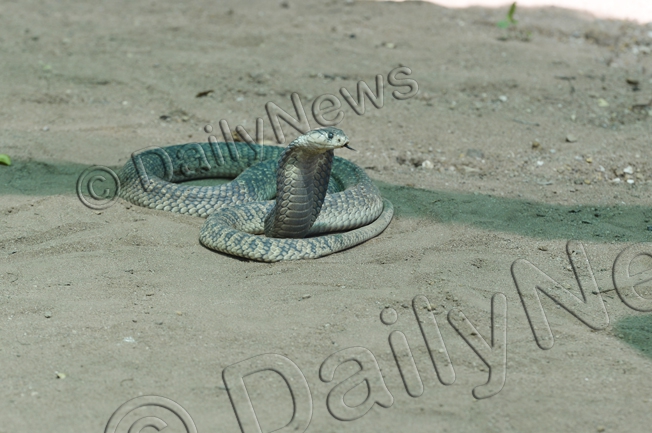
Snake venom does not run out when the snake dies, warns Mr Aaron Tsatsi, who is a professional snake catcher.
In an interview with BOPA, Mr Tsatsi, of SSSSSnake Consultancy, said killing snakes could be dangerous, especially to those who do so and then take photographs to brag on social media.
He said some snakes produce venom even in death and when someone has a cut the poison may enter the blood stream through that wound, which could be life threatening.
He said snakes sensed threats and retaliated with a bite, something that may also cause death.
Mr Tsatsi said the best arsenal to snake bites was education.
He said people ought to know the kind of snake they were dealing with.
He also said it was difficult to know which snakes were dangerous or venomous. People depended on the colours and patterns on the skin of the snake to decide which snake it would be.
However, Mr Tsatsi said depending on patterns could be misleading as some venomous snakes appeared similar to those which may not be venomous.
He said watching snake experts capture snakes may also be dangerous as trying to emulate them may result in a bite.
He advised that there was need to call for professional help each time someone encountered a snake.
He further said where there was a possible use of social media, people could take pictures and send to professionals for advice.
“People confuse the male bum slang with the green mamba, which does not exist in Botswana. It’s venomous and it can eject a milligram of venom which affects the clotting mechanism of the blood,” he said.
Mr Tsatsi said snakes do not have a good metabolism to regulate their body temperature.
He stated that it was the reason they bask in winter and hide in summer as the heat stressed them out.
He said during heatwaves, people should avoid trees and opening windows as cobras and mambas could reach heights.
He further advised that before sitting under trees, people should check the area for any snakes.
He called on people were to keep their yard spaces clean to avoid creating breeding grounds for snakes.
Mmokolodi Nature Reserve’s snake handler, Mr Masibi Ikgopoleng, said Botswana had five species of venomous snakes. Mr Ikgopoleng explained that there were three types of venom which was neurotoxic, and thereby paralysed organ cells.
He said cytotoxic venom, which was produced by adders, corroded the skin and the flesh of the victims.
He said some snakes had hemotoxic venom, which affected the blood as it attacked the white blood cells.
He said snakes were attracted to human areas to find food. He explained that snakes enjoyed silence and retreated when they sensed threats. Mr Ikgopoleng said for venom to kill, it should be injected into the blood stream.
“Venom and poison are two different things. For poison to kill, it has to enter the body organs and venom has to enter the blood stream,” he said.
He said once the poison entered a cut in the body, it was as good as a bite as the venom would enter the body.
He said venomous snakes were born with venom and fangs which made it dangerous.
Princess Marina Hospital’s Public Relations officer, Mr Keemenao Sampisi said cases of snake bites were not common at the hospital.
He said once in a long while, they received patients with snake bites, while many were managed at satellite facilities in the Greater Gaborone region.
However, he indicated that the hospital had enough supplies of anti-venom. Mr Sampisi said the hospital serviced Greater Gaborone and cases were managed at facilities. ENDS
Source : BOPA
Author : Gontle Merafhe
Location : GABORONE
Event : Interview
Date : 14 Feb 2024
Related News

26 Jul 2026

24 Jul 2026
Desert Bush Walk here

24 Jul 2026