


Botswana backs strategy on diagnostic lab services

30 Aug 2023
Botswana supports the adoption of the proposed strategy on diagnostic and laboratory services and systems for the WHO African region.
The proposed strategy, if agreed upon, would run from 2023-2032 and would put emphasis on the continent’s ability to diagnose and offer laboratory services.
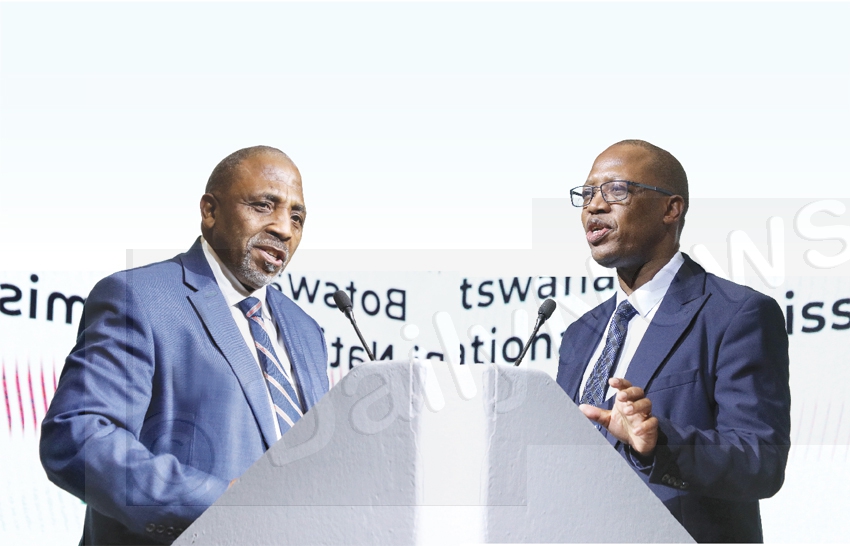
Botswana’s support for the strategy, which seeks to boost the continent’s preparedness in management of pandemics, was rendered by the Assistant Minister of Health, Mr Sethomo Lelatisitswe at the ongoing 73rd Session of WHO Regional Committee for Africa.
Mr Lelatisitswe said recalling the resolution of Africa RC58 of 2008 on strengthening public health laboratory in the WHO African region and the 2008 declaration on strengthening the laboratory system, Botswana noted with concern, the slow progress made by African member states in improving diagnostics and laboratory services.
“This slow progress is evidenced by the secretariat’s assertion that access to diagnostic services in the WHO African region remains weak and not adapted for people centered healthcare and its control and health securities,” he said.
Mr Lelatisitswe said the COVID-19 pandemic had buttressed the need to build resilient diagnostic and laboratory systems, which not only supported healthcare provision, but also enabled the health systems to prevent diseases and effectively respond to outbreaks.
He informed the gathering that Botswana had made tremendous strides in improving its diagnostic and laboratory system, particularly in the areas of human capacity building, outbreak detection and management.
The assistant minister said strides had also been made in areas of reduction of the turnaround time of laboratory results, expansion of national public health laboratory testing menus, genomic sequencing for detection of newly discovered strong signals as well as accreditation of laboratories for improved health quality services.
“There are currently nine laboratories that have been accredited using ISO 15189 and 2012.
Their accreditation has helped to assure the quality of analytic reports they generate, and their capabilities to conduct specimen testing that adhere to international standards,” he said.
Mr Lelatisitswe also highlighted that Botswana had put mechanisms in place through the National Quality Assurance laboratory, under the National Health Laboratory for verifying the quality of laboratories in the form of proficiency testing and external quality assurance systems.
“Government and private laboratories are therefore equally monitored for proficiency testing for regulatory compliance and other purposes,” he said.
Representatives from various African countries also supported the proposed strategy, indicating that it would help improve universal access to health by all, and would give the continent an edge in dealing with any emerging pathogens, as well as to timely respond to pandemics.
Delegates also concurred that the COVID-19 pandemic had shown the need for African countries to develop their own capacity in dealing with similar situations from preventative measures to management and manufacturing of necessary equipment and medicines.
Representatives also agreed that the strategy would enable Africa to deal with challenges it faced without the desperation of seeking assistance from outside the continent.
They expressed disappointment that only 30 per cent of facilities in Africa had the necessary equipment and reagents to diagnose, a situation they agreed was mostly hard felt in rural areas. ENDS
Source : BOPA
Author : Olekantse Sennamose
Location : GABORONE
Event : 73rd session of World Health Organisation
Date : 30 Aug 2023
Related News
15 Jun 2026

15 Jun 2026
Twenty minutes that shook Gaborone

15 Jun 2026
Botswana considers diplomatic mission in Russia

15 Jun 2026
Leverage neurodiversity for innovation gains

15 Jun 2026