


Poverty likely result of Neglected Tropical Diseases
15 Nov 2021
The consequences of Neglected Tropical Diseases (NTDs) stretch beyond the health sector because the morbidity and severity occasioned by them could leave those affected impoverished and abandoned by their families.
This was said by Minister of Health and Wellness, Dr Edwin Dikoloti during a November 13 ceremony marking the end of an over P2 million Japanese government-funded NTDs project.
He therefore urged all stakeholders to take into consideration the socio-economic and other factors driving disease transmission and take stock of the roles that each could play in the fight against NTDs.
Dr Dikoloti implored the private sector and communities to invest more in health issues, including the control of NTDs.
Thanking the benefactor for partnering with his ministry to address NTDs challenges, he said ‘these grants are important in that they came at a time when external funding for many programmes had begun to decline and I have no doubt that without the assistance from the Japanese government, my ministry could not have achieved the gains we have made so far’.
Dr Dikoloti said the grant, which ran from March last year to October 31, aimed at aiding the elimination of soil-transmitted Helminthiasis (also known as worm infection) in the eight endemic districts of Ngamiland, Chobe, Okavango, Serowe/Palapye, Selebi Phikwe, Mahalapye, Ghanzi and Kgalagadi North.
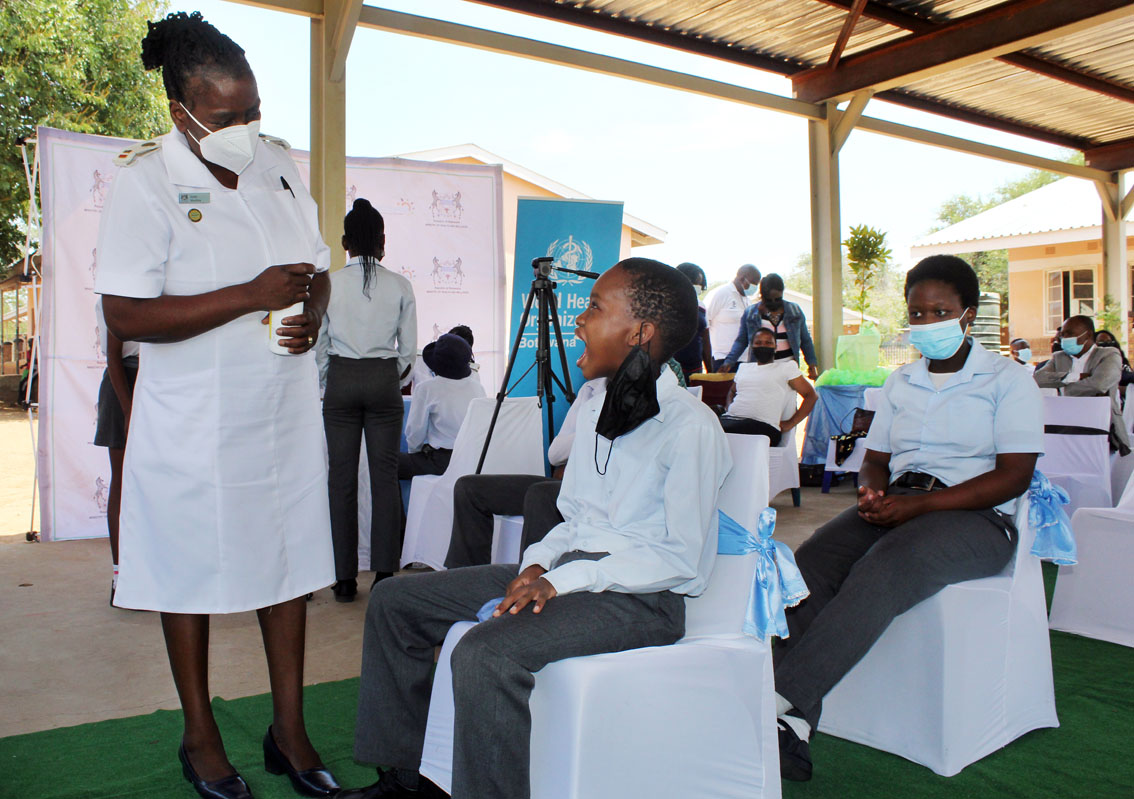
It enabled implementation of interventions including capacity building for health workers and stakeholders, establishment of sentinel surveillance sites for the disease, community and school awareness campaigns and support for the treatment of children in the most affected age group of 5-14.
Speaking at the same occasion, Japanese ambassador Mr Hoshiyama Takashi said universal health coverage was one of Japan’s diplomatic policies which it promoted all over the world.
Mr Takashi said acceleration of elimination of NTDs project was part of his country’s initiative to promote universal health coverage.
He applauded Ministry of Health and Wellness’ efforts pointing out that implementation was more difficult than financing, particularly since the project was carried out during the time of COVID-19.
WHO country representative, Dr Josephine Namboze noted that although the grant had ended, ‘it does not mean the diseases are no longer there’ therefore the journey of elimination should continue.
Dr Namboze said if left unattended, NTDs had the potential to kill and disfigure millions of people.
Every year, the disease brought about financial devastation to affected families, she said.
Dr Namboze said out of the 1.7 billion affected by NTDs, almost half were children.
She said during the four mass drug administration targeting 134 000 children in Botswana, 121 000 translating into 90 per cent, were reached.
Through the project, 300 health workers across different cadres were trained, Dr Namboze said.
She thanked the ministry for all efforts made in the implementation of the elimination of NTDs project, which was very challenging as it was executed amid COVID-19
She also thanked the government of Japan for the spirit of giving. Ends
Source : BOPA
Author : Keamogetse Letsholo
Location : Kasane
Event : Closing ceremony
Date : 15 Nov 2021
Related News

07 Aug 2026
Xiplomacy Hosting the world building the future

07 Aug 2026
Xiplomacy Pursuing the greater good for all
06 Aug 2026