


Primary measures sustainable Mosepele
01 Jan 2021
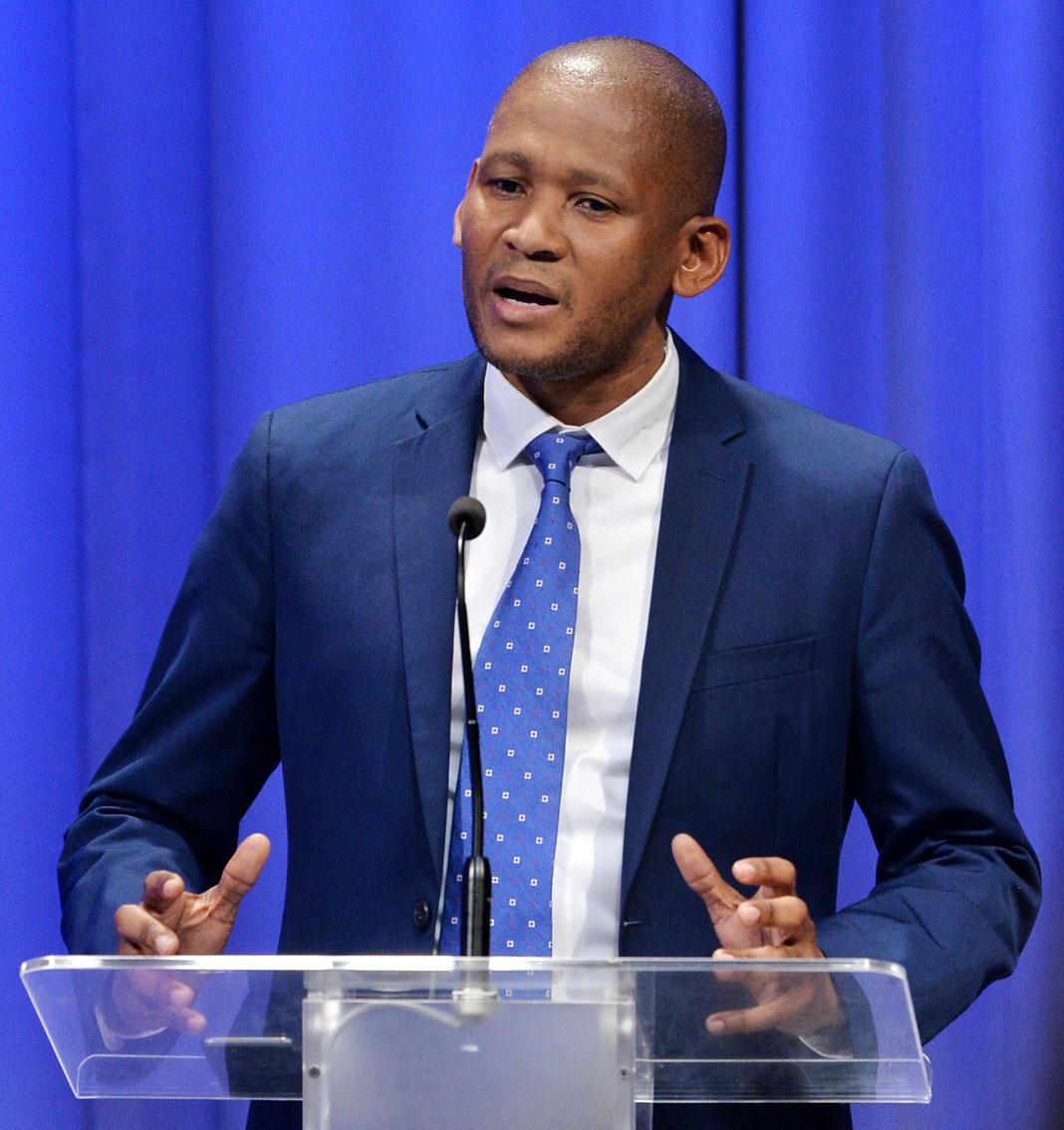
Deputy coordinator of the Presidential COVID-19 Task Force, Professor Mosepele Mosepele, has appealed to members of the pubic to adopt sustainable behaviour in fighting the pandemic.
Professor Mosepele said wearing of face masks, sanitizing, washing hands regularly with soap and water, observing social distancing and avoiding gatherings were the primary and sustainable measures in dealing with the corona virus.
Giving an update on new year's eve, Professor Mosepele encouraged the public to abide by the basic measures that he said would not only protect people against COVID-19, but will also guard against other viral infections such as flu.
"Let us stick to sustainable behaviour," said Professor Mosepele.
Professor Mosepele also cautioned that the increase in COVID-19 cases in South Africa (SA) and the discovery of a new virus was a serious threat to Botswana.
"We share borders with South Africa, therefore, the risk of getting the virus from that country is high. It is advisable to avoid unnecessary cross border trips.
As we are under threat of the new virus in SA, which is reported to be spreading faster, my appeal to our people, is to abide by the sustainable and effective measures such as wearing of masks, sanitizing and social distancing," said Professor Mosepele.
He indicated that closure of borders would not be a sustainable measure in containing the spread of the virus.
While the world was still exploring measures of containing the virus, among them the use of vaccines, Professor Mosepele was adamant that the measures in place, if executed accordingly were sustainable.
He stated that surveillance measures that were used locally could not detect the type of virus.
He said the technology was being developed to achieve that feat. Looking at the country proximity to SA and constant cross border movement, Professor
Mosepele said no one could rule out the possibility that the new virus in SA might already have crossed into the country.
However, Professor Mosepele said measures were put in place to avoid cross border spread of the virus.
He said allowing entry only to people who have tested negative was the most effective measure of containing cross border spread of the virus.
Professor Mosepele has further stressed that movement of people was the most effective way of spreading the virus.
He observed, when the initial cases were recorded, the pandemic was restricted to Gaborone and some few localities in its periphery.
However, Professor Mosepele said as result of continuous of people across zones, the virus has now spread to all corners of the country. He said movement of people result in continuous mixing of different households and new cohorts and therefore worsening the spread of the virus.
“Before the July holidays, the country used to register about 20 new cases per day. The numbers continue to rise after that holiday. We then stressed on the community to reduce movement and not allow their normal way of doing things to take precedence, but people continued to travel,” said Professor Mosepele.
He said measures such as lockdown were put in place to restrict movement and contain the spread of the virus.
Professor Mosepele said a curfew was one of the measures put in place to control movement of people.
Therefore, Professor has appealed to individual members of the public and the business community among others to join hands in fighting the pandemic.
He further revealed that restrictions in movement such as curfew will also affect issuance of inter-zonal travel permits. Professor Mosepele said during the time of curfew, issuance of permits would also be affected, as priority will also be given to those with pressing reasons.
Furthermore, Professor Mosepele has urged the people not to despair, but rather focus on the fight against the COVID – 19 pandemic.
“We came a long covered by the dark cloud of COVID – 19 and therefore some people are likely to get fatigued and surrender at a time when the fight has intensified. I appeal to you to continue with the basic and sustainable measures in place. We must take pride in what we have achieved. We have made it this far as a result of the measures we had put in place,” said Professor Mosepele. Professor Mosepele said other countries were overwhelmed by COVID – 19 cases and deaths resulting in shortage and congestion of health facilities. As we usher in, the year 2021, Professor Mosepele said in 2020, a total of 42 people passed on as a result of COVID – 19. He said 544 167 tests have been conducted, of which 398 890 were done at local facilities while 145 274 were done at the border posts. Professor said of the total 13 019 Batswana who have tested positive to COVID – 19, 12 136 have recovered while 913 cases were still active.
He added some of the 12 136 people that have recovered from COVID -19 some of them suffered long term effects. He said 177 of the active cases of which 150 were Batswana and 27 foreign nationals were recorded on December 27 and 28, 2020. Ends
Source : BOPA
Author : Moshe Galeragwe
Location : Gaborone
Event : Update
Date : 01 Jan 2021
Related News
08 Aug 2026

07 Aug 2026
Xiplomacy Hosting the world building the future

07 Aug 2026