Corruption still threat
09 Dec 2020
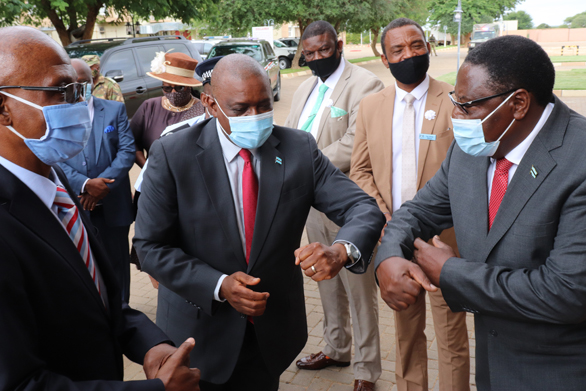
Although Botswana has been performing relatively well according to the Corruption Perception Index of Transparency International, having maintained a constant score of 61 per cent since 2017, concerted efforts by different stakeholders are critical to ensure corruption is addressed so that it does not erode the economy and the country’s good reputation of democracy, rule of law and governance, President Dr Mokgweetsi Masisi has said.
“As we are aware of the challenges that we continue to face with regard to transparency and corruption such as the grey listing of Botswana by the Financial Action Task force (FATF) and Eastern and Southern African Anti-Money Laundering Group (ESAAMLG), the listing is a stain on the reputation of Botswana,” he told his audience at the United Nations Anti-Corruption Day held under the theme, ‘Unity Against Corruption’ in Palapye yesterday.
In the long run, he said, it might negatively impact on the economy and limit access to international lending institutions as well as affect government’s ability to open bank accounts in foreign jurisdictions needed for both diplomatic and economic initiatives.
Among the key stakeholders in fighting corruption the President mentioned the private sector and civil society revealing that the Directorate on Corruption and Economic Crime (DCEC) signed a memorandum of understanding with BOCONGO, the umbrella body for civil society, in February.
It was envisaged that through the partnership, Botswana achieve its international and continental obligations of promoting and strengthening the active participation of groups outside the public sector.
President Masisi said corruption remained an impediment to Botswana’s socio-economic development and the biggest threat to the country’s achievement of its sustainable development goals, UN SDGs as well as attainment of prosperity for all espoused by Vision 2036.
Reiterating his commitment to combating the scourge, he said strengthening anti-corruption institutions and the legislative as well as the regulatory environment remained the bedrock of his presidency.
The President said reforms to strengthen capacities of oversight institutions were of paramount importance to enhance the chances of putting corruption to an end and noted that a number of anti-money laundering, counter terrorism and financial governance pieces of legislation were passed between 2017 and 2019.
“Of great significance to these legal instruments were the amendments to the Proceeds and Instruments of Crime Act (PICA) and Financial Intelligence Act,” he said.
Through investigations of suspected money laundering and application of PICA legislation, Dr Masisi said, Botswana was in a better position to detect all forms of money laundering to meet Financial Action Task Force standards.
President Masisi also mentioned that government had developed several initiatives to address the emerging global challenges of money laundering and terrorism financing which included conducting sector risk assessment, sensitization of non-profit organisations (NPOs) and profiling them to guide decision making.
“I am also pleased to share with you that the Corruption and Economic Act is currently undergoing review with a view to amend it to address the ever changing landscape of white collar crime,” he said adding that Whistleblowing Act which came into effect in 2016 was also being reviewed to ensure it met minimum international standards,” he said.
The President further indicated that a strategy against money laundering and financial terrorism was developed in May.
Other corruption fighting measures were the Declaration of Assets and Liabilities Act and the establishment of the Ethics and Integrity Directorate, said Dr Masisi.
“These achievements are notable, because if left unchecked, corruption erodes trust in government and undermines social contract. It further fuels and propagates the inequalities that often lead to social ills like violent extremism and conflict,” he said.
He said government remained committed to achieve its objective to improve the lives of Batswana through employment creation, improved service delivery and strengthening government structures.
“In order to achieve meaningful progress, particularly in the face of corruption and related activities, we must enhance our risk management capacity to control corruption at a strategic level. Let me assure you that those charged with corruption will face the full might of the law,” he said.
DCEC director general, Mr Tymon Katlholo revealed that corruption related reports had dwindled expressing the fear that individuals and entities might getting away with criminal activities.
Mr Katlholo vowed that DCEC would continue to fight corruption as mandated adding however that concerted efforts by all stakeholders and citizenry were needed. Ends
Source : BOPA
Author : Tshepo Mongwa
Location : Palapye
Event : Launch
Date : 09 Dec 2020
Related News


10 Aug 2026