


Thumbs up for whistle blowing legislation
10 Jul 2018
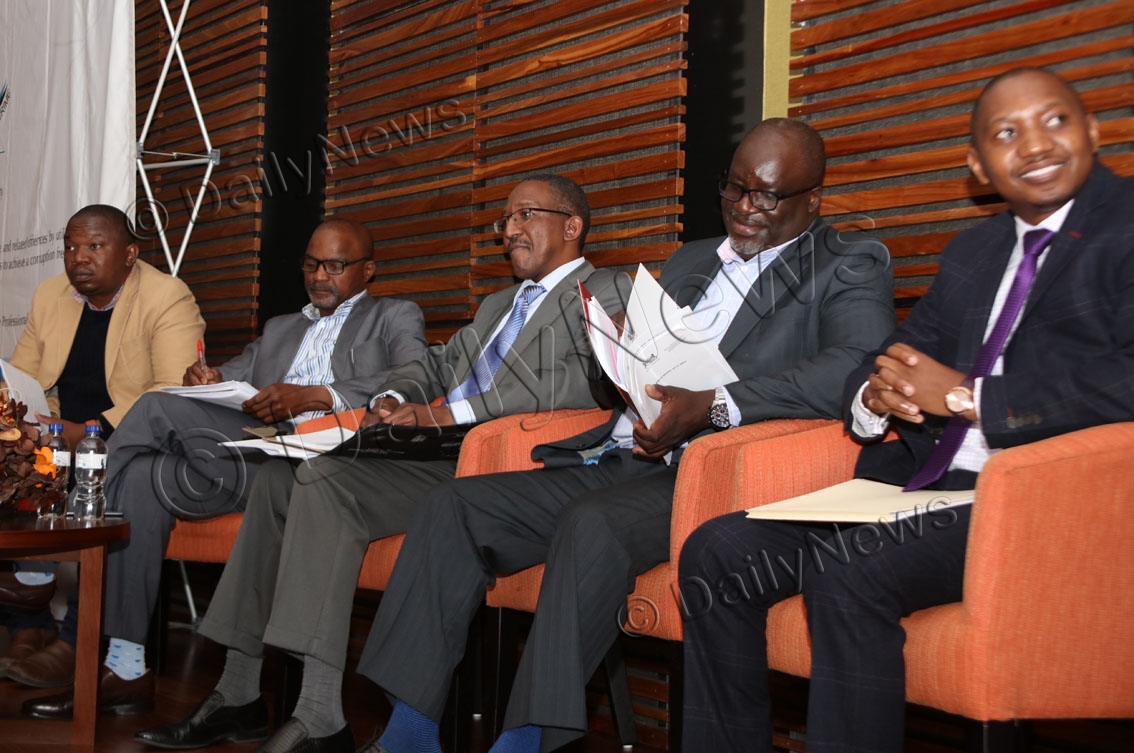
Panelists discussing The Whistle-blowing Act (2016) and its application in conjunction with other statutory provisions for disclosure of impropriety, have given a thumbs up to government for formulating the law.
Professor Tachilisa Balule of the Department of Law at the University of Botswana said it was a good move by government to establish the piece of legislation and urged all stakeholders to interrogate it further.
“A whistle-blower should be someone who is public spirited. Such people need to be protected. Disclosure of wrongdoing should be protected.
What is of fundamental importance is the principles that underpin a law that protects whistle blowers,” he said.
Professor Balule added that a multi-pronged approach was necessary to tackle wrongdoing.
He said mechanisms for disclosure or means of reporting should be in such a way that the whistle-blower is protected from intimidation and reprisals.
Executive director of Botswana Watch, Mr Robert Letsatsi thanked government for enacting such legislation.
He said all had a stake in addressing issues of corruption as no single organisation could handle corruption.
“Collaborative partnership is important, public health, financial integrity can be harmed if we don’t combat corruption and crime practices. Civil society must be positioned to do advocacy in these efforts and raise public awareness,” he said.
Mr Letsatsi said the law was relatively new, with no factual data to share, adding that Section 3 excluded issues of economic crime, illicit financial flaws such as tax avoidance and money laundering.
He advised that there was need for a whistle-blowing fund.
Mr Mpho Letsoalo from the DCEC Legal Services, was confined to the provisions of the legislation and explained the details that led to the existence of the legislation.
Mr Letsoalo said the law was undoubtedly long overdue and it was important that it was shared with members of the public.
Deputy board chairperson of MISA Botswana, Mr Oteng Chilume highlighted that the media had been on the lookout even before the new law was enacted.
He said it was important to review if the editorial process was adequate enough to address whistle-blowing. Mr Chilume said the media acted as a balancing platform between government, private sector and the public.
Human rights lawyer, Mr Uyapo Ndadi said there was great fear among the public to whistle blow, adding therefore that there was need to look into how to restore confidence in the public.
“The law does not give physical protection to the whistle-blower and this is the fundamental problem.
The reporting mechanism should be overhauled.
It is marginally a good law, but the chilling factor is the reporting mechanism,” he added.
For his part, director general of DCEC Mr Victor Paledi said the purpose of the discussions was to cooperate and collate efforts to promote corporate governance and business ethics in the private and public sectors as well as NGOs.
“There is need to promote business ethics because if left unchecked can lead to bad business decisions, which ultimately leads to unethical behaviour such as corrupt practices,” he said.
The aim of the panel discussion was to bring together stakeholders from different organisations to discuss issues regarding the Whistle-blowing Act and the protection of informers.
It was an initiative of the Botswana Business Ethics Forum to discuss issues bearing on the act and its application.
The Act provides for the manner in which a person may disclose, conduct adverse to the public interest, to provide for the manner of reporting and investigations of disclosure on impropriety and the protection against victimisation of persons who make the disclosures and to provide for related matters.
The Act came into effect on December 9, 2016. ENDS
Source : BOPA
Author : Baleseng Batlotleng
Location : Gaborone
Event : Panel discussion
Date : 10 Jul 2018
Related News

18 Aug 2026
Government Commits To Electoral Reform

18 Aug 2026