


Environmental concerns blamed on human exploits
03 Jul 2018
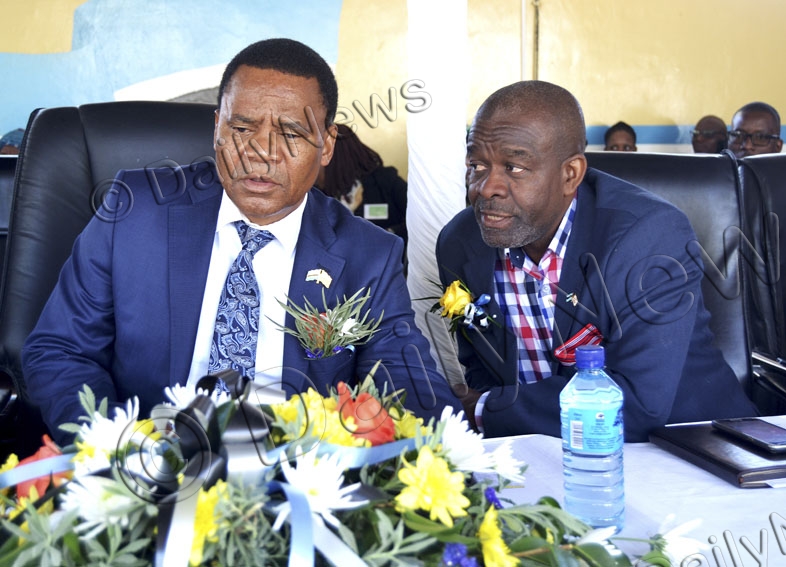
Botswana is faced with multiple critical environmental challenges ranging from air and water pollution, rangeland degradation, deforestation and desertification among others, Vice President Slumber Tsogwane has said.
Speakin during World Environment Day commemoration in Rakops recently, Mr Tsogwane said environmental concerns were a result of human activities adding it was imperative to establish ways of living without causing any harm to the environment.
It was crucial to embark on developments with care so that future generations could also derive the same benefits from the same resources, he said.
Vice President Tsogwane said government’s challenge was to facilitate dreams of individual Batswana while ensuring sustainable development.
Botswana, he said, was therefore developing a national strategy for sustainable development to provide a pathway to harness the ingenuity and industriousness of the country to maintain and accelerate the economy.
He said the earth was nearing critical tipping points of depletion or irreversible change pushed by high population growth and economic development and Botswana, including local villages, was no exception.
Citing Makgadikgadi Pans, the vice president said they were a source of livelihood for the people of Boteti in terms of agriculture, thatching grass, firewood, mophane worms and fruits but warned that the activities may put the pans under enormous pressure if not properly managed.
He said conservation called for unity in pursuit of sustainable development.
UB Dean of Science Professor Julius Atlhopheng said research undertaken on the state of the environment in the Central District revealed that pressures on available resources, particularly during drought periods, appeared to have impeded the regenerative capacity of natural vegetation cover thereby inducing land degradation.
It also revealed the extinction of certain plants, increased incidence and severity of dust storms, disappearance of thatching grass as well as decreased number and variety of wildlife species.
Professor Atlhopheng said sustainable human settlement built resilience through planning and integrated approaches adding that environmentally sound infrastructure improved living conditions.
He also indicated that proper land use mitigated against climate change.
Prof Atlhopheng said it was critical to train planners for inclusion of environmental planning and to capacitate them with regard to integrated assessment and planning.
He said it was essential to transition to green economy and improve use of integrated tools and methodologies for sustainable human resource management.
The event was held under the theme; “ Beat plastic pollution” which calls for people to consider the everyday changes that could be made to reduce the heavy burden of plastic pollution on natural places, wildlife and own health.
It was revealed that 13 million tonnes of plastic were thrown into the ocean every year and that plastic accounted for around 90 per cent of ocean waste with 46 000 pieces of plastic covering every square mile.ENDS
Source : BOPA
Author : Thandy Tebogo
Location : RAKOPS
Event : World Environment Day commemoration
Date : 03 Jul 2018
Related News

19 Aug 2026


18 Aug 2026
Government Commits To Electoral Reform
18 Aug 2026