Botshoma calls for support against ozone depleting gases
22 May 2018
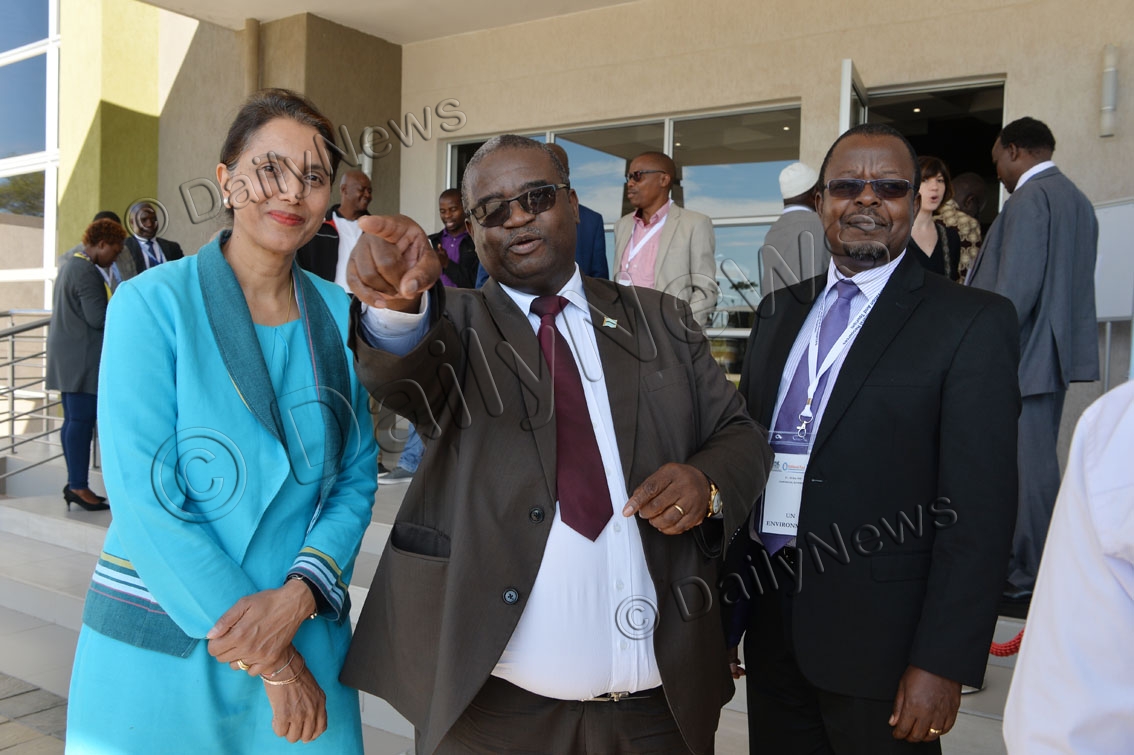
Deputy permanent secretary in the Ministry of Environment, Natural Resources Conservation and Tourism says due to the dangers of a depleted ozone layer, Botswana signed the Vienna Convention and became party to the Montreal Protocol in March 1992.
Officially opening the meeting for ozone officers from English and French speaking countries on behalf of Minister Tshekedi Khama, Mr Thabang Botshoma said the objective of the Vienna Convention was to control and phase out ozone depleting substances (ODSs).
He said as a low volume consuming country, Botswana was entitled to support to meet her obligations under the protocol.
“Through support from the multilateral fund of the Montreal Protocol, we were able to establish the national ozone unit in 1992 in the Department of Meteorological Services which is a focal point charged with among others data collection and reporting to the ozone secretariat, raising awareness to both the industry and the general public.
Furthermore, the department facilitated the development of the national ozone regulations,” he said.
He said in Botswana ozone depleting substances were widely used as coolants in the refrigeration and air conditioning sectors, as propellants in aerosols, for fire-fighting purposes, fumigants for perishables and control of pests in agricultural applications.
“Botswana managed to find alternative technologies that replaced some of the above applications in accordance with the Montreal Protocol requirements,” he said.
Mr Botshoma also said the implementation of the Montreal Protocol activities in Botswana was going well.
“Please be informed that government of Botswana implemented activities under the Montreal Protocol that include among others, the institutional strengthening project for capacitating the national ozone office, the refrigeration management plan for setting ground for phase-out of ozone depleting substances, terminal phase out management plan (TPMP) for total phase out of chlorofluorocarbons (CFC), halons and methyl bromide.
“We are now implementing hydro-chlouro-flouro-carbons phase-out management plan (HPMP) which will enable Botswana phase down HCFC and introduction of new technologies which will assist in the protection of the ozone layer, and at the same time energy efficient addressing global warming concerns,” said Mr Botshoma.
He said the 2016 consumption data that Botswana submitted to the ozone secretariat, showed that the country had already achieved the 10 per cent HCFC reduction. He added that by continuing with the ongoing activities, the country would achieve the 35 per cent reduction by 2020 in line with the phase down schedule.
“These were achieved through capacity building and strengthening of enforcement officers such as customs officers, refrigeration and air conditioning experts and Botswana refrigeration and air conditioning association (BRACA),” said Mr Botshoma.
He noted that Botswana had also ratified subsequent amendments, namely the London, Copenhagen, Beijing and Montreal Protocols.
“We are yet to ratify the Kigali Amendment,” he said, adding that they had initiated the processes of ratifying the Kigali amendment and hoped to finalise by the end of the year.
For her part, Ms Katherine Theotocatos, compliance programme officer from the ozone secretariat, said Botswana had the most ambitious environmental legislature in Africa and the world.
She thanked government for working tirelessly in the fight against ozone depletion and called on other countries to benchmark in Botswana. Ends
Source : BOPA
Author : Omphile Ntakhwana
Location : Gaborone
Event : Meeting
Date : 22 May 2018
Related News

19 Aug 2026
19 Aug 2026
Summit Designates BVI Vaccine Bank
19 Aug 2026