Women call for domestication of gender protocol
17 Apr 2018
Following Botswana’s ratification of the Southern African Development Community (SADC) Protocol on Gender and Development, women political activists have called for its domestication to address participation of women in politics as Botswana gears for 2019 elections.
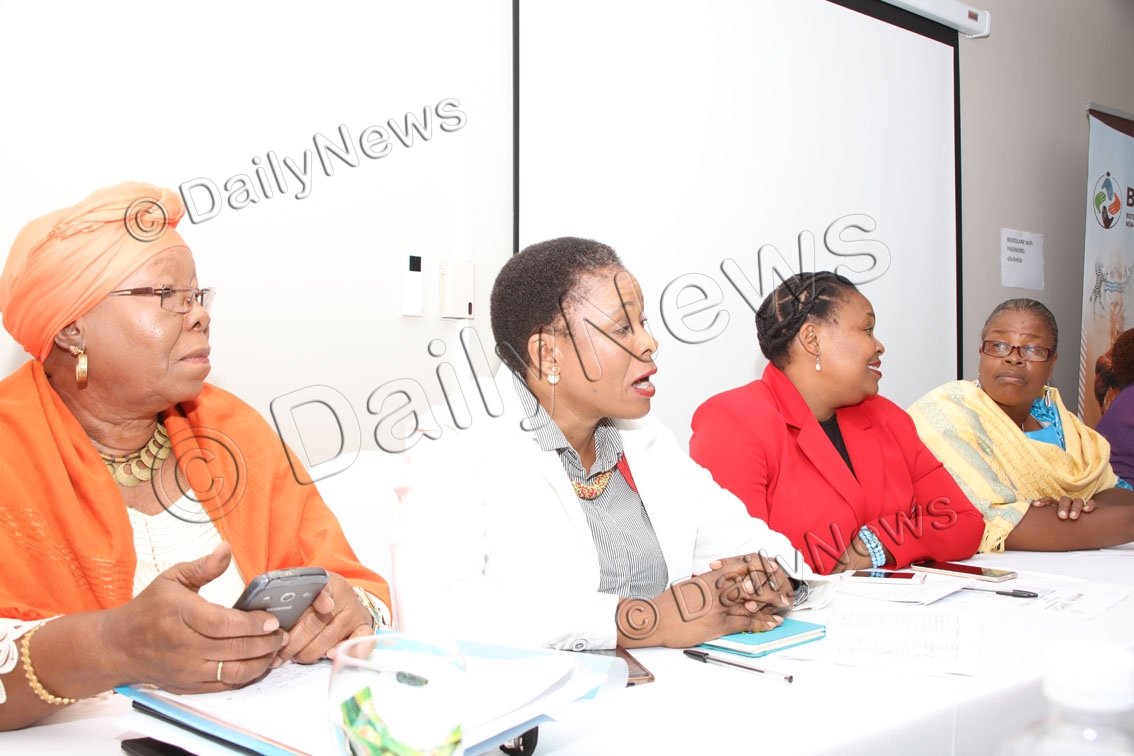
Speaking at a seminar organised by Gender Links and Botswana Council of Non-Governmental Organisations (BOCONGO) for women in Politics recently, SADC Gender Protocol Alliance for Botswana, Ms Chigedze Chinyepi said despite the signing, more still needed to be done to increase the number of women in political leadership positions.
She said they used the SADC barometer to gauge participation of women in politics, which showed that Botswana lagged behind compared to other countries in the region.
However, she said, before the signing of the Gender Protocol, Botswana implemented issues on gender, but did not have the legal instrument that could elucidate the path.
Ms Chinyepi emphasised the need for women to appreciate the few women who had made it to political leadership positions.
She emphasised the need for them to strategise on how they could grow their numbers in leadership roles as it was clear that women outnumbered men in terms of population.
Gender Links Country Manager, Ms Gomolemo Rasesigo said that Botswana needed to do more to be at par with other countries in the region who were successful in empowering women in politics.
She noted that the 2014 General Elections statistics reflected that for the council seats there was 19 per cent of women representation nationwide, while in Parliament there was 10 per cent of women representation.
“Research shows that in the 2014 Elections there was 53 per cent of women voters compared to their male counterparts. 37 per cent of women were registered as candidates against 63 per cent of men as candidates,” she said, adding that these numbers showed that women needed to do more to improve their numbers in political positions.
She further divulged that in the region, the highest number of women Members of Parliament was at 44 per cent in Seychelles, while Lesotho had the highest number of women at local government level in the region.
She said Lesotho was followed by Namibia, which constituted 42 per cent of women at local level, while South Africa had 41 per cent of her cabinet made up of women, hence the need for Botswana women in politics to improve their numbers.
She noted that if numbers remained this way, Botswana should institute reforms and devise legislative frameworks that should be implemented to empower the women to occupy political positions.
Further, she noted that research had shown that Botswana’s First Past Post electoral system impeded women from breaking the glass ceiling in politics as it limited the leadership potential of women.
But BOCONGO executive director, Mr Botho Seboko advised women politicians to work on empowering themselves to be able to deliver adequately, and productively rather than expect to be given positions on a silver platter.
“Accept positions on merit. Refuse to accept positions because you are a woman,” he advised.
He highlighted the need for women to focus on borrowing one or two leaves from China’s governance system, which focuses on meritocracy rather than democracy as meritocracy was result-oriented and yielded leaders who delivered with excellence after going through rigorous training.
He cautioned women of being used by male politicians for sexual favours, which affected the playing field.
Women political activists from all political parties in Botswana decried that most women were made to be involved at lower positions in the party, where they worked to organise political events, but lagged behind when it came to public speaking.
“We don’t want to be organisers and cheerleaders, we want to be standing at the podium and talking,” said Botswana Democratic Party representative, Ms Daisy Bathusi.
The women called for the revival of Caucus for Women in Politics, which they could use as a platform to support other women.
They also called for electoral reforms that would level the playing field.
They wanted affirmative action and political parties to invest in women through funding of their trainings.
Further, they wanted a constitutional reform that they said could, together with all other requirements, be used to domesticate the SADC gender protocol and offer them equal opportunity to compete with their male counterparts. ENDS
Source : BOPA
Author : Calviniah Kgautlhe
Location : GABORONE
Event : Seminar
Date : 17 Apr 2018
Related News

20 Aug 2026

20 Aug 2026
Atamelang new transport minister
20 Aug 2026