

Mining remains major contributor to economy
22 May 2017
Mining, which has been the mainstay of Botswana’s economy since post-independence period continues to be the biggest contributor to Botswana’s gross domestic product (GDP).
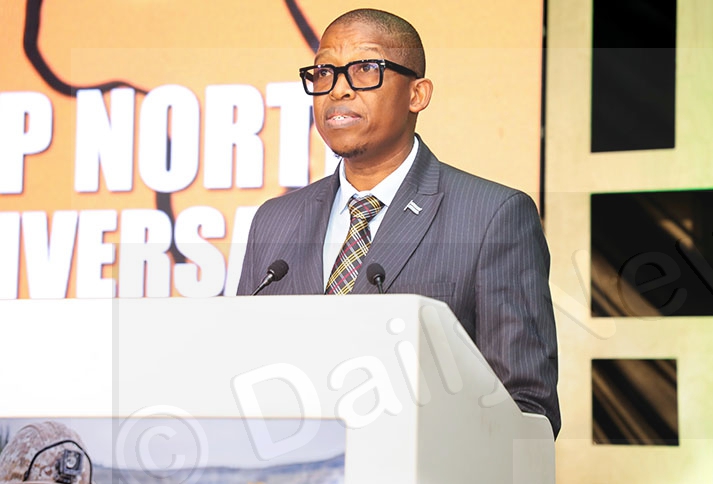
In an interview with BOPA, the Minister of Mineral Resources, Green Technology and Energy Security, Advocate Sadique Kebonang said that his ministry oversaw an industry that generated funds for the overall national budget.
“Mining contributes the bulk of the national GDP, and funds generated from the industry helps to finance national developmental projects. Although mining is a capital-intensive industry, which uses heavy plant equipment we still have about 16 000 people employed in the mining sector,” Advocate Kebonang said.
Minister Kebonang said, “while the mining industry has experienced challenges, it remains a crucial employer and source of revenue.” He said that downstream activities in the mining industry were steadily picking up.
“Over the past decade our country has worked creating beneficiation in the mining industry, and while we have had teething problems, we are now starting to get mature sight holders and about 3 000 people are employed in diamond beneficiation,” Advocate Kebonang said.
He said that the ministry was exploring the use of renewable energy as an area where employment could be created. “We are currently exploring opportunities in the renewable energy sector, we believe this is where we can generate funds and create jobs and business prospects for Batswana. This is a new sector which I believe can be viable in this country,” he said.
He said that the mining sector had invested a lot in education, and applauded the mining houses for spending on the pre-school, primary and secondary schooling of citizens as well as providing tertiary education scholarships and the technical training of employees.
The minister said that his ministry was concerned about the high HIV/AIDS infection rates in mining towns such as Selibe Phikwe and had deferred awareness on treatment and preventative measures to the Ministry of Health and Wellness.
He said that his ministry had a zero tolerance towards corruption, stating that they worked in tandem with the Public Procurement and Public Assert Disposable Board (PPADB) in creating transparent processes.
“We also have corruption prevention units within our ministry as well as officers from the corruption prevention agency (the Directorate on Corruption and Economic Crime, DCEC) working with us to further ensure transparency,” Minister Kebonang said. ENDS
Source : BOPA
Author : Pako Lebanna
Location : GABORONE
Event : Interview
Date : 22 May 2017
Related News

30 Jul 2026
BMC eyes new export deals
29 Jul 2026
Modisaotsile on rise to the top
29 Jul 2026
Poultry industry attains self-sufficiency
28 Jul 2026
Ross Breeders pioneers Botswana poultry exports
28 Jul 2026