

Botswana enhance trade potential
18 May 2017
Botswana has to adopted outward looking policies to enhance trade with the global economy given its small domestic market.
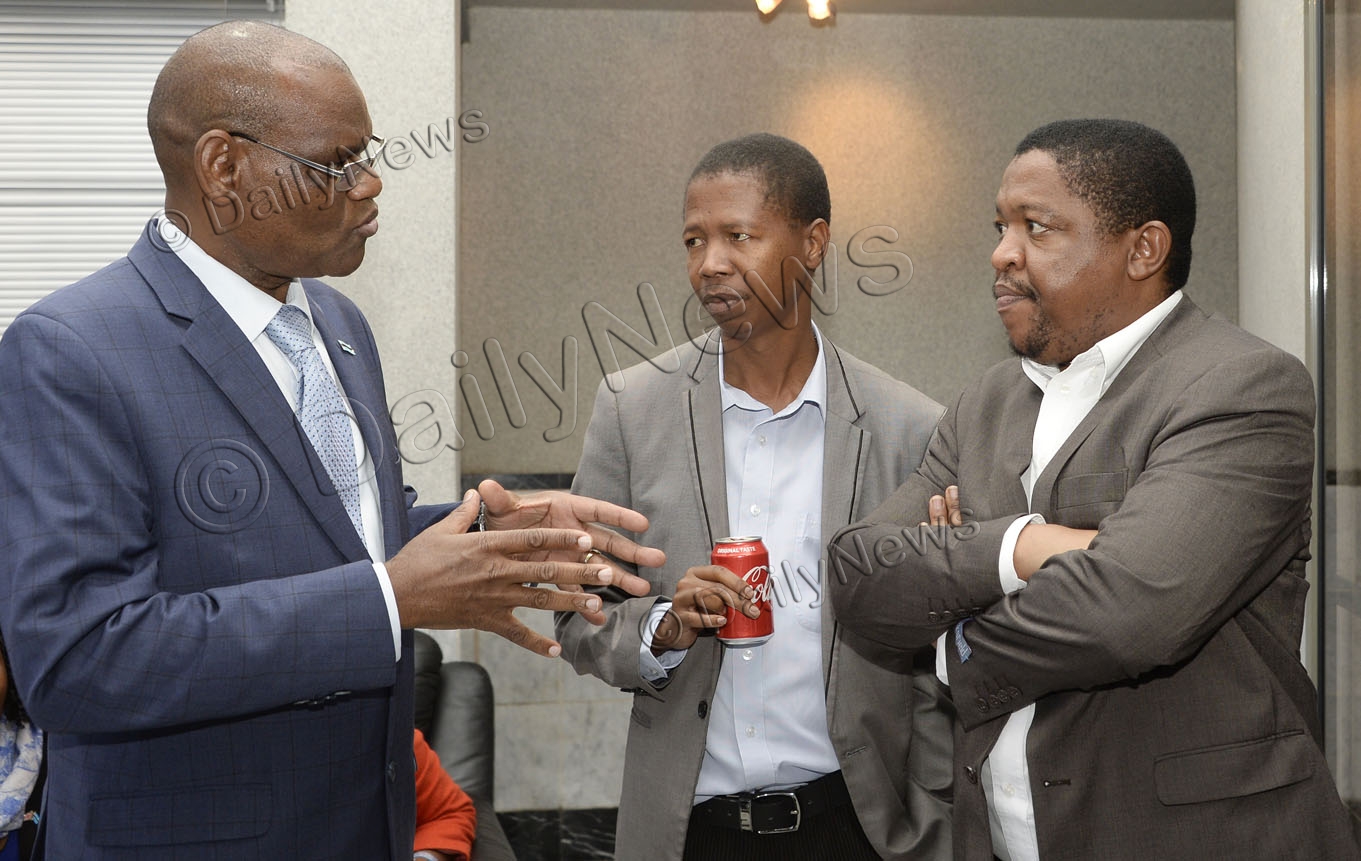
Speaking at the 2016 Bank of Botswana report launch recently, Bank’s Director of Research and Financial Stability, Dr Tshokologo Kganetsano said such policies have been equally adopted by Asian countries such as Singapore and Hong Kong and have realised economic growth.
Dr Kganetsano said a policy of high trade tariffs and non-trade barriers restricts international trade and makes trade with other countries less profitable and undesirable.
He said an open trade drives economic development and growth, enhances domestic productivity and competitiveness and also improves social welfare.
Dr Kganetsano said global trade had been buoyant since mid-1980s and had been supported by a combination of technological developments and policy changes, which favoured greater openness.
The geopolitical environment has also been favourable.
He said globalisation had reduced the extent of inequality across countries such as China, which had become the world’s biggest trading partner.
Dr Kganetsano said the major advantages of free trade accrue when a country specializes in goods and services in which it has comparative advantage.
He further said unhindered access to imports enhanced consumer welfare as consumers have access to a great number of products and services at affordable prices.
Dr Kganetsano further said benefits of openness wre maximised when domestic markets were competitive and efficient.
However, there has been little or no growth in global trade since the start of 2015 due to slow pace of GDP growth, reduced spending on investment and rebalancing of Chinese economy.
There has also been an increase in non-tradeable services as incomes rise and there has been resistance to globalisation.
Talking about Botswana, he said the country had a free capital mobility, allowing free movement of capital in and out of the country.
The country also has favourable macroeconomic policy environment and also institutional support.
But Botswana’s exports are dominated by diamonds, at 80 per cent while the share of copper-nickel has declined since 2011.
The share of exports to the UK have declined mainly following the relocation of the Diamond Trading Company (DTC) to Botswana while exports to Belgium and India have increased.
Talking about Foreign Direct Investment (FDI), he said there had been capital inflows mainly focusing on the mining sector.
Dr Kganetsano said Europe had been the main source of FDI while Africa accounted for 23.3 per cent of total FDI.
There are challenges to diversification and growth and according to Dr Kganetsano, there has been modest benefits for industrialisation and employment creation. With limited FDI except in the mining sector, there has been limited
linkages with the rest of the economy and Dr Kganetsano said these had however been addressed by developing downstream activities such as diamond cutting and polishing industry.
Botswana has high costs of doing business and Dr Kganetsano cited costs of importing and exporting as the highest in the region.
There are opportunities in areas in which Botswana has comparative advantage such as diamonds, tourism, financial and health services, agriculture and other minerals, which government has realised their potential and clusters are to be created. ENDS
Source : BOPA
Author : Tebagano Ntshole
Location : GABORONE
Event : 2016 Bank of Botswana Report Launch
Date : 18 May 2017
Related News


30 Jul 2026
BMC eyes new export deals
29 Jul 2026
Modisaotsile on rise to the top
29 Jul 2026
Poultry industry attains self-sufficiency
28 Jul 2026
Ross Breeders pioneers Botswana poultry exports

28 Jul 2026