

Donate blood to save lives
16 Jun 2013
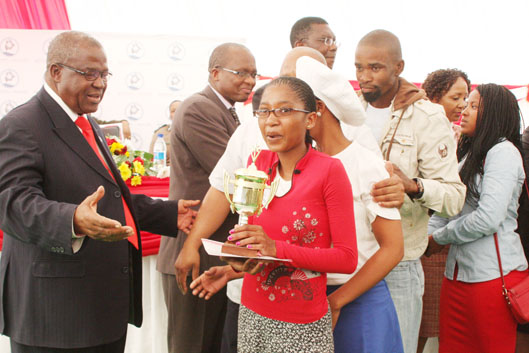
The severe shortage of blood in the country has contributed to the high mortality rate , Minister of Health, Dr John Seakgosing has said.
In his address during commemoration of world blood donor day over the weekend , Dr Seakgosing pleaded with the local community to donate blood and save lives.
He said the national blood transfusion service required 40 000 units per year, yet the total collections from the two blood centres was only 19 279 units in 2012. “Operations have been postponed, operations have been cancelled because there was no blood,” the minister said.
He said although the country had qualified medical doctors to perform operations, some operations could not be carried out because they needed blood hence losing some lives in the process.
He said low collections had negative impact on the quality of health care services since blood transfusion played a major role in the treatment of a number of clinical conditions. “Transfusion of blood and blood products help save thousands of lives every year,” Dr Seakgosing said.
Botswana subscribed to the millennium development goals, three of which would not be achieved without safe and adequate blood supply, according Minister Seakgosing.
Over the years, he said, secondary schools had been providing the highest number of blood units collected and they needed to be commended for their work. “The collections in the secondary schools represent only 46 per cent of the total collections in 2012,” he said.
The minister only two centres in the country collected and those were in Gaborone and Francistown. This, he said, contributed to low collection as the two centres had been having challenges to meet the demand.
He said the ministry had decided to decentralise some of the national blood transfusion service activities such as blood donor recruitment, blood collection and results dissemination.
Dr Seakgosing said the blood transfusion services decentralisation would start with four sites in Molepolole, Mahalapye, Maun and Serowe. And the ongoing construction of the Francistown blood transfusion centre with the financial assistance from the United States of America would also improve the blood collection.
The World Health Organisation (WHO) country representative, Dr Eugene Nyarko said the need for blood and blood products was increasing every year. Therefore, he said provision of safe and adequate supply of blood and blood products should remain an integral part of every country’s health policy.
Dr Nyarko said WHO recommended that countries should coordinate all activities related to blood collection, testing, processing, storage and distribution through a well-coordinated system under a national policy. He commended Botswana for having laboratories, which were able to screen all blood for infections.
However, he said the country still needed to achieve the target of collecting 100 per cent of blood supply.
The deputy permanent secretary in the ministry of health, Dr Victor Molelekwa reiterated the need for the local community to donate blood, saying many lives were being lost. “For instance, in Marina we cancel about 35 per cent of the operations because there is no blood,” he added. ENDS
Source : BOPA
Author : Bonang Masolotate
Location : RAMOTSWA
Event : Blood donor day commemoration
Date : 16 Jun 2013
Related News

18 Jun 2026
Commission targets youth empowerment
18 Jun 2026
Countries commit to partnership
18 Jun 2026
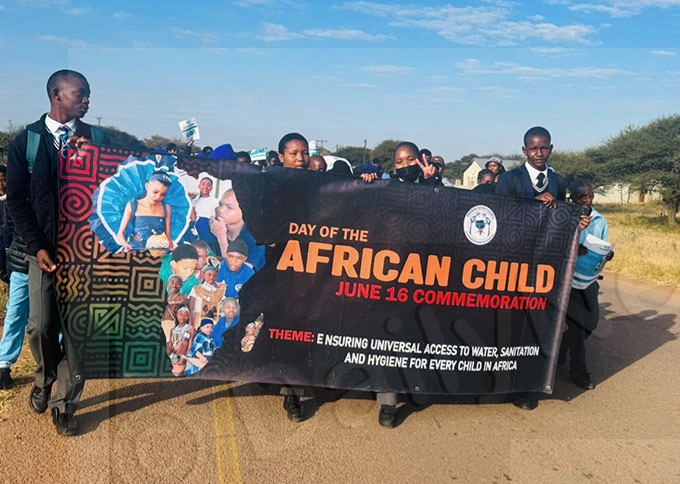
Learners commemorate Day of the African Child
18 Jun 2026
LESABO project to address water scarcity
18 Jun 2026