

BotswanaNamibia share notes judicial resourcing
02 Nov 2016
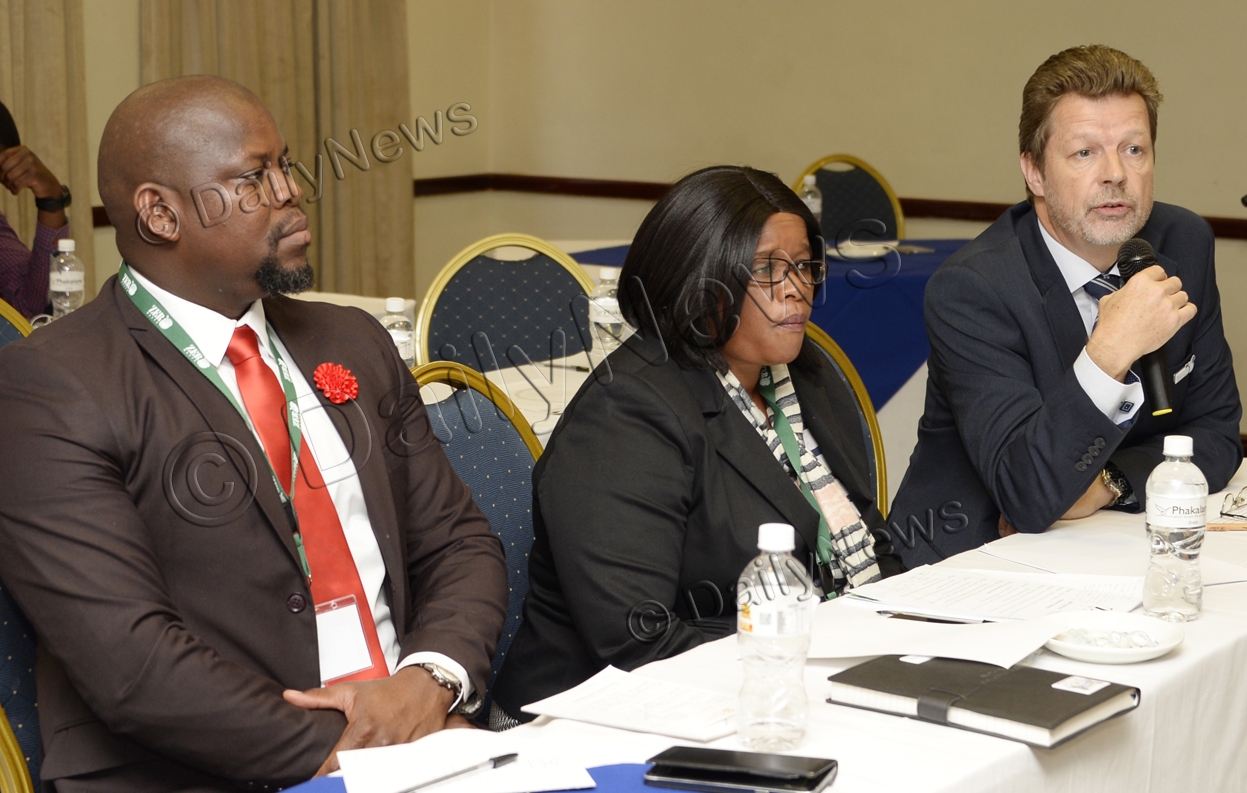
The Chief Justice of Namibia says key stakeholders in the administration of justice should regularly come together to consult, share ideas and map out strategies to strengthen the rule of law and the independence of the courts.
Giving a key note address at the just ended Conference of the Judiciary and its Key Stakeholders held in Gaborone, Mr Peter Shivute said they too in Namibia recently concluded a similar exercise where they invited all key stakeholders to subject the judiciary to a critical review and to map out strategies to deal with identified challenges.
Held under the theme: Resourcing the Judiciary and its key stakeholders, Mr Shivute concurred that resources are an integral part of any functional system in the world.
He reasoned that an under-resourced system moves down the stream of inefficiencies whereas a well-resourced system inherently wields the power of success and celebration of positive outputs.
Justice Shivute further noted that the judicial system of any country across the globe is no exception, adding that a well-resourced judicial system brings about a well-functioning judicature.
He argued that a well-functioning judicature in turn fosters efficiency, investor confidence and significantly contributes to national economic performance.
Justice Shivute further pointed out that in contemporary democracies, judicial systems occupy a central position among public institutions as autonomous and independent branches of government.
He explained that the reason is that an independent and effective justice system does not only provide a safeguard for human rights, but also provides for safeguards for a number of other aspects of life in society that are crucial to the well-being of individuals and organisations such as health, work, industrial relations, social security, family relations, civil rights, environmental rights, consumer rights, property rights and the enforcement of contracts.
From an investment perspective, he submitted that judicial institutions have to ensure respect for property rights and guarantee contract enforcement and handling of commercial disputes through fair adjudication.
Justice Shivute said in so doing, well-resourced judicial institutions reduce the risk of uncertainty, on the one hand, of starting and conducting business, which leads individuals to invest, and on the other hand, of consumers and service users, which reduces transaction costs and strengthens the market.
Meanwhile, he noted that in many countries, the finances of the judiciary are appropriated by the legislature and the budgeting is done under the supervision of the ministry or department responsible for justice.
He argued that this evidently raises a perception of subtle control of the judiciary through the custody of the pocket.
He said in Namibia the then prevailing situation has changed with the establishment of the Office of the Judiciary, as the administrative component of the judiciary, which now has an Accounting Officer, also called Permanent Secretary who does the budgeting and is responsible for overall financial administration for judicial. ENDS
Source : BOPA
Author : Benjamin Shapi
Location : GABORONE
Event : Judiciary Conference
Date : 02 Nov 2016
Related News


27 Aug 2026
Nature underpins economy

27 Aug 2026
Makgekgenene urges tighter workplace controls

27 Aug 2026