

Programmes bring hope to Loologane family
31 May 2013
Life does not get any better by the day.
The monotony of each day does nothing but worsen the situation. In fact it shatters dreams and any little hope left seems farfetched. Such is the order of life in the Tsiane family.
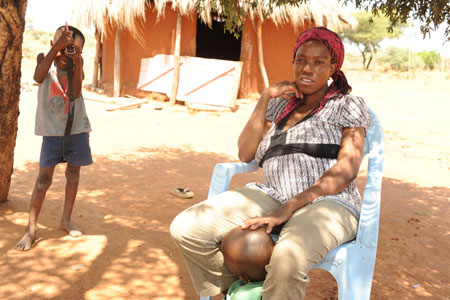
The family lives in Loologane settlement, officially classified as a remote dweller settlement. Here the young women make majority of the family and the rest is a number of children under the age of 10.
Ms Lesedi Tsiane, 26, wakes up every morning to cook something, if they are lucky, for the family to eat. Porridge and tea make most of the diet. If there is some work to do, it would largely be laundry for the childrem and she would wait for the day to pass by.
The only flick of hope for her is the baby she is expecting. Although she is the most literate in the family having completed her Form V and a Certificate in Business Information System, her qualifications are equal to nothing in the village. She cannot work anywhere except to travel to Molepolole, over 100 kilometres to find a job. Now that she does not have any income, it becomes even more cumbersome to rent accommodation while seeking employment outside Loologane.
This means as long as she is in the village and being the only light of the family as her name suggests, her misfortune can only bring doom for her family as there is no source of income.
The family once depended on her when she was working as an office clerk in some company in Molepolole for a year. As fate would have it, she was laid off this year in February as a cost cutting measure.
The 26 year old saw herself retracing her foot steps back home with literally nothing to do. Ms Tsiane does not know when she will ever go back to look for a job again now that a baby is on the way.
The settlement gets services from Letlhakeng, which is far in the midst of scarce transport. It is difficult for her to keep herself informed because information reaches her when it is already too late especially job vacancies.
Her youngest sisters have both failed Form III and Form V. The family does not have transport money to enroll them back to school. On oner hand, her elder sister, Ms Boitumelo Tsiane, 29, although lives in her own yard, struggles to make ends meet. She is the only one who works for Ipelegeng and this is the only source of income for her.
Although she benefited from one of the poverty eradication programmes, LIMID, all is not well. She was given 19 goats in 2012. Four died and she is now left with 17. She sometimes uses her little earnings from Ipelegeng to buy vaccines for her goats. “My life depends entirely on the Ipelegeng pProgramme, without it I have no hope,” she says, adding that she also buys food for her family with her earnings.
Although she appreciates government’s efforts in eradicating poverty, she appeals to government to bring services to them quickly, citing that if there were no delays they could go somewhere.
Besides these challenges, Boitumelo wants to see her project big and hiring other young people. She also says unemployment in their village is high among youth. They are not keen to take up government programmes because of the delays they see happening to those who have already benefited from.
All these clearly show that while government’s initiatives are crafted to take many out of poverty, there are gaps that need to be filled to make life in rural areas better. ENDS
Source : BOPA
Author : Lindi Morwaeng
Location : MOLEPOLOLE
Event : Feature
Date : 31 May 2013
Related News


18 Jun 2026
Commission targets youth empowerment

18 Jun 2026
Countries commit to partnership

18 Jun 2026
Learners commemorate Day of the African Child
18 Jun 2026