

Swedish agency trains disaster committees
28 May 2013
Training officers in Risk and Vulnerability Assessment (RVA) will help disaster committees and communities in identifying risks, coping mechanisms and applying appropriate solutions in disaster prone areas.
National Disaster Management Office (NDMO) in partnership with Swedish Civil Contingencies Agency is conducting Risk and Vulnerability Assessment (RVA) workshop in Palapye, aimed at developing a cadre of trainers in (RVA) methodology who are able to train others and further disseminate the method and its tools.
In an interview, NDMO official Mr Maeletso Pego said the workshop follows a survey that was conducted by the Swedish in 2012 to look at the country’s capacity to handle disaster risk issues.
He said the survey identified some gaps in the system which the Swedish could help NDMO to address.
The two organizations agreed on capacity building focusing mainly on RVA, he added.
At the end of the training, trainers will train other staff members who will in turn conduct RVA in disaster prone areas and submit the report to the district commissioners’ offices who will submit the report to NDMO for consolidation.
Mr Pego said RVA will help disaster committees and affected communities to sit down and agree on critical areas in their communities that needed protection when disaster strikes such as emergency services like water and health facilities.
He said the whole exercise was meant to come up with a national risk and vulnerability assessment which will help his office in decision making.
For his part, Swedish Civil Contingencies Agency Prof Ho Hamza explained that Risk and Vulnerability Assessment is a method to learn how to analyze, evaluate and investigate the constraints and opportunities for risk reduction, development or issues facing the community.
Prof Hamza noted that RVA was one of the most important tools particularly used at community level to identify risks, coping mechanisms and appropriate solutions to disasters in their respective areas.
The assessment, he said was advantageous because it involved the community from the start as such it was the community that assessed itself.
He said NDMO’s work was overwhelming because of lack of capacity hence the Swedish came to NDMO rescue to assist with capacity building. ENDS
Source : BOPA
Author : Kgotsofalang Botsang
Location : PALAPYE
Event : Interview
Date : 28 May 2013
Related News

18 Jun 2026
Commission targets youth empowerment
18 Jun 2026
Countries commit to partnership
18 Jun 2026
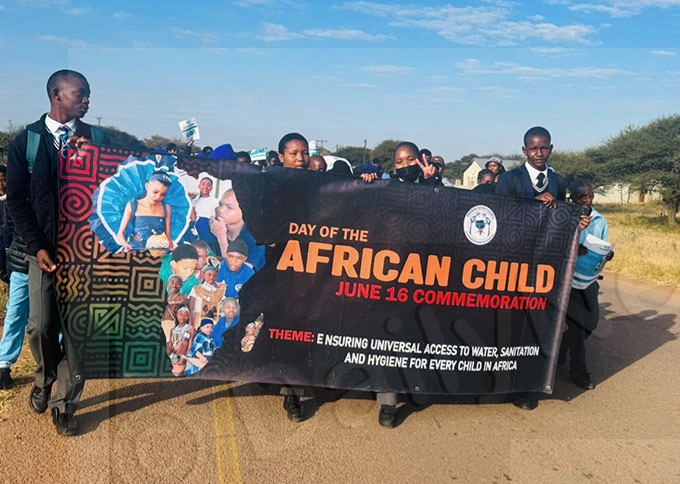
Learners commemorate Day of the African Child
18 Jun 2026