SADC takes poverty head-on
16 May 2016
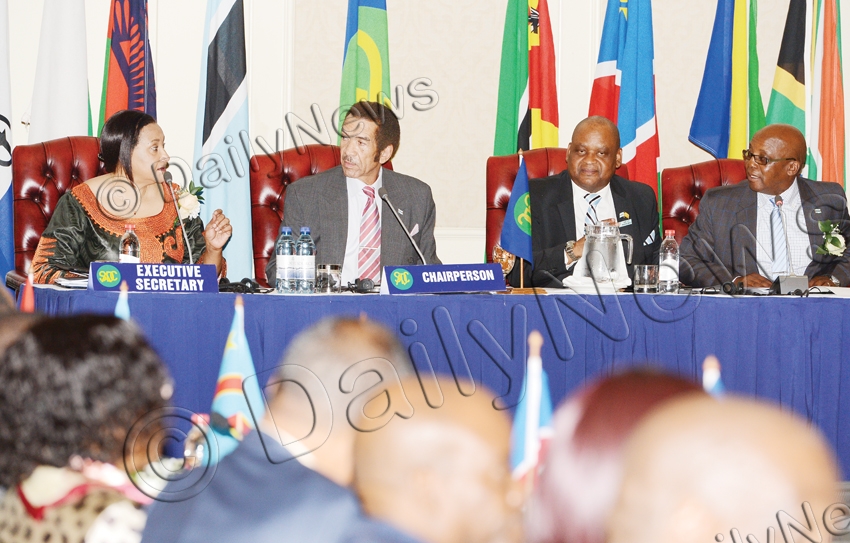
President Lt Gen. Dr Seretse Khama Ian Khama says 40 per cent of SADC citizens live in abject poverty.
Officially opening a SADC ministerial workshop on food security and poverty eradication in Gaborone on Monday May 16 President Khama said it was for this reason that poverty eradication had become an overarching objective for the SADC regional integration agenda.
“As partners in this initiative, our main aim is to enhance the standards of living and quality of life of all our people,” said President Khama, who is also SADC chairperson.
Thus, he said the Regional Poverty Observatory (RPO) was established in 2008 to oversee implementation of the agreed poverty eradication strategies while managing a region wide poverty information and data base.
Specific objectives of the RPO, he said, were to intensify dialogue on regional dimensions of poverty, strengthen collective efforts to address poverty through regional cooperation and integration as well as promotion of dialogue on the partnerships necessary to obtain United Nations Sustainable Development goal of ending poverty in all of its forms everywhere.
President Khama said poverty and food security could not be addressed in isolation and required harmonisation of various sector policies to address food security and poverty as a common agenda.
“We must ensure that we at all times fully engage often marginalised groups, namely the youth and women as well as the poor in our efforts to improve agricultural production and distribution,” he said.
President Khama said the SADC region was currently experiencing the worst drought conditions in over two decades, adding that cereal production had decreased by approximately 21 per cent in 2015 compared to 2014.
He said crop production during the 2014/15 rainfall season was especially affected by prolonged dry spells in Botswana, Lesotho, and Namibia, which also extended to the maize belt of South Africa, southern Angola and southern Zimbabwe.
He said at the same time, Madagascar, Malawi and Mozambique were affected by both floods and prolonged dry spells, adding that all member states experienced decreases in cereal outputs.
President Khama also highlighted that the effect of the recurring droughts in the region had not spared the livestock sub-sector that was reflected in a loss of grazing, diminished water resources and increased incidences and prevalence of animal diseases.
He said there had been slow growth in regional livestock production while SADC as a whole remained a net importer of livestock products.
The SADC chairman, however, noted that there were ongoing regional efforts to address challenges, which included the development of regional poverty eradication framework and adoption of multi-dimensional poverty index as an alternative measure for member states and stakeholders.
Executive secretary of SADC, Dr Stergomena Lawrence-Tax said according to the Regional Vulnerability Assessment and Analysis of 2015, on average, 25.2 million people were vulnerable to food insecurity annually during the past five years.
She said 12 of the SADC member states had stunted growth rates of above 20 per cent in a region that is home to 292 million people, of whom 61 per cent lived in rural areas and derived their livelihood from agriculture.“This level is deemed unacceptable. By the World Health Organisation WHO) standards, this level indicates chronic malnutrition,” she said. ENDS
Source : BOPA
Author : Mmoniemang Motsamai
Location : GABORONE
Event : SADC ministerial workshop
Date : 16 May 2016
Related News
04 Apr 2026
03 Apr 2026
Government provides relief on fuel costs

01 Apr 2026