

Botswana makes progess in MDGs
05 Apr 2016
Botswana has made commendable progress during the 15 years of implementation of the Millennium Development Goals (MDGs) due to a combination of prudent micro economic policies and good governance.
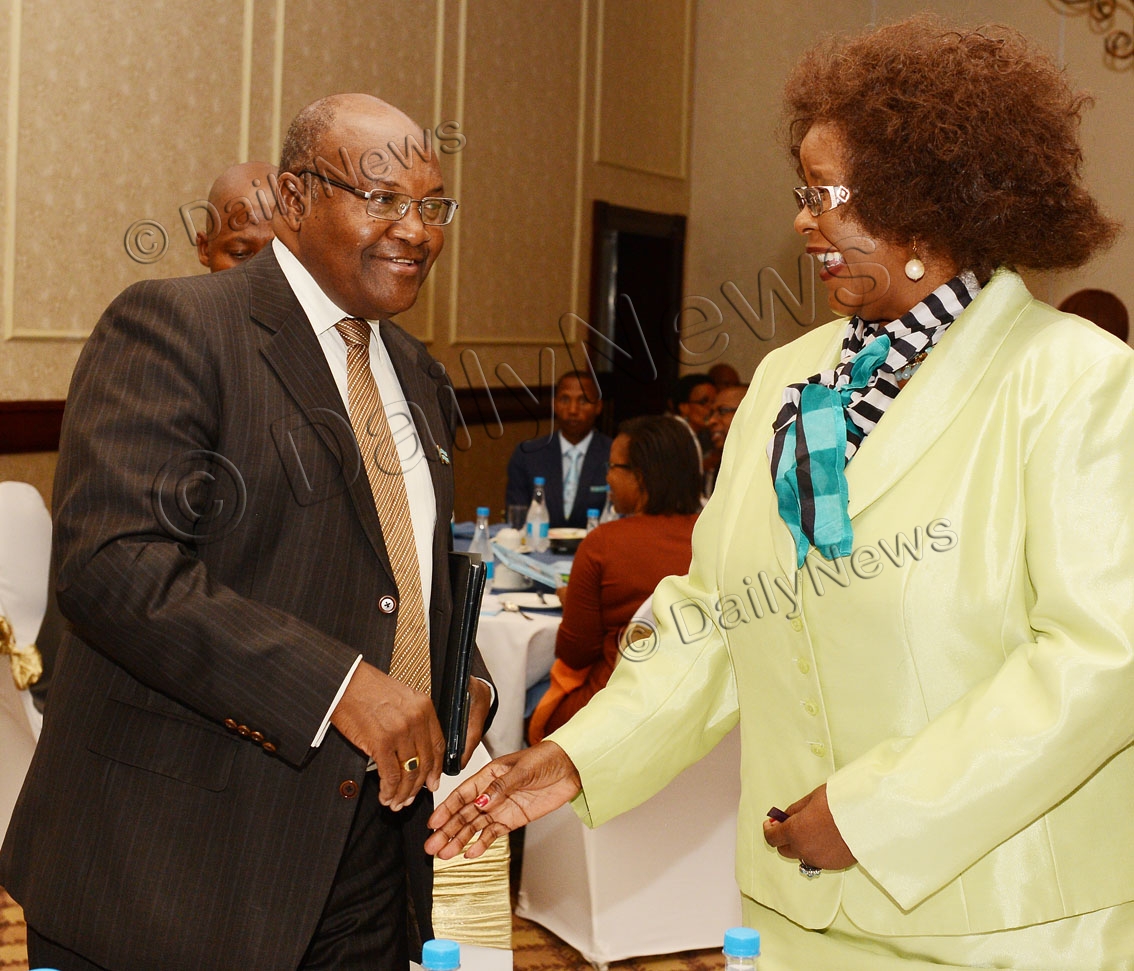
The Minister of Finance and Development Planning, Mr Kenneth Matambo said this when giving a keynote address at a joint Ministry of Finance and Development Planning and United Nations Development Programme (UNDP) breakfast meeting yesterday.
The meeting, which was organised to launch the 2015 Millennium Development Goals (MDGs) Status for Botswana (MDGs) and 2015 Global Human Development (GHDR) reports highlighted both reports’ key findings and policy recommendations.
Overall, he said, Botswana achieved nine out of the 12 MDG targets that the country set for itself to achieve over the 15 year implementation period, which is a 75 per cent success rate.
This progress, Mr Matambo said was demonstrated by the sustained economic growth and strong social and development programmes, which have had positive impact on the lives of Batswana over the years.
“We would not be succeeding as a government, if such programmes did not have this type of impact on the citizens of this country,” he added. The impressive achievement of the MDGS, he said was also a result of valuable guidance provided by the country’s national development frameworks, namely the National Vision 2016 and the National Development Plans nine and ten.
Additionally, the Minister said the UNDP and other development partners also played key roles in partnering with government in order to ensure that implementation of the MDGs, as well as the production of all the three Botswana MDG Status Reports of 2004, 2010 and 2015 were successful.
However, he said progress was slow in respect of improvement of maternal health, ensuring environmental sustainability and developing a global partnership for development.
With regard to eradicating abject poverty, he said Botswana had more than halved the proportion of people living below the poverty datum line (PDL) “five years ahead of that target.”
“And this halving means from halving from 47 per cent in 1993 to 19.3 percent in 2010.
That’s quite an achievement. We have been hitting the target ahead of time,” he added.
More impressive, Mr Matambo said was that the reductions were pronounced more in rural than in urban areas, with the Kgalagadi South District experiencing the largest decline.
This he said was a commendable achievement, as quite a large proportion of the country’s population lived in rural areas.
This achievement, he said was a result of government’s aggressive implementation of the poverty eradication initiative.
The Finance and Development Planning Minister said Botswana has also consistently achieved universal access to 10 year basic education, which ranged around 90 percent for most part of the period under review. Between 2005 and 2012, Mr Matambo said a decline in primary school dropout rates from 1.5 to 1 percent was also experienced, which he said signified further progress made by the country towards achieving the access to 10 year basic education tenet. Botswana, as evidenced by the continuous number of girls enrolled compared to boys through the years, he said, had also successfully eliminated gender disparities within the entire education system.
Furthermore, he said good progress had been made in the number of women holding key decision making positions within government, private sector and civil society in the period up to 2015. He said Botswana also realised a major breakthrough in achieving the targets of reducing levels of child mortality, which declined from 56 deaths per 1000 live deaths to 11 deaths per 1000 between 2001 and 2011.
However, Botswana’s national target of reducing maternal mortality ratio, from an estimated 326 per 100 000 to 150 per 100 000, between 1991 was clearly not achieved as it fluctuated between 193 and 163 per 100 000 in the five years under review.
He said there is need to pay particular attention to reviewing and improving the maternal general health system in order to improve performance with regard to this target.
He observed that the proportion of seats held by women in political office declined over the previous elections. Ends
Source : BOPA
Author : Lorato Gaofise
Location : Gaborone
Event : Meeting
Date : 05 Apr 2016
Related News
22 Jun 2026
22 Jun 2026
BIC Drives Dialogue On Future Growth



21 Jun 2026