

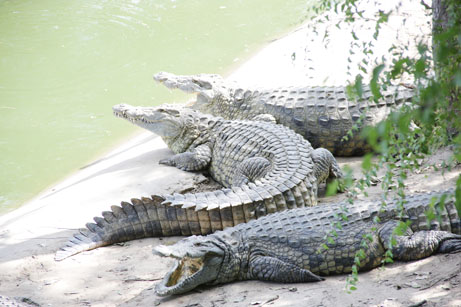
Crocodiles terrorise settlement
09 May 2013
Mr Gathole Segogo has been looking after his goats for many years at the Tsamekona settlement near Maun. The settlement lies along the dark banks of the crocodile-infested Thamalakane River and from here Mr Segogo used to count his goats up to 150.
Today, Mr Segogo, who has also relied on income from selling his livestock is not a happy man any more. The 35-year-old farmer says it is unbelievable that he only owns two goats. “Greedy crocodiles have feasted on all my goats,” he says in an interview.
Just recently, his sister lost 15 goats in a short space of time due to the menacing reptiles. Other residents living along the river have similar tales to tell. The residents say crocodiles have left them empty handed.
“We used to have lots of livestock here but most of us are empty handed because of crocodiles and dogs in the area,” says another resident, Mr Lamiki Chomba. Mr Chomba, who has lost eight goats to stray dogs, says the reptiles and canines have effectively impoverished the river communities.
“This river is supposed to be a source of life for communities in the area but unfortunately it is also exacerbating poverty,” says Mr Segogo, adding that when they seek compensation they are told that the situation is treated as a disaster.
His opinion is that government should consider compensating affected residents, just like it is done with leopards and lions. He says compensation is necessary because residents have lost their dues to the crocodiles and thus have difficulty in taking care of their families.
Government, he says, should review the Compensation Act so that Batswana do not become a destitute nation dependent on food baskets. Mr Chomba says a person was once killed, adding that more deaths would take place if no measures are put in place.
He suspects that the crocodiles originate in Sitatunga Camp, which is situated 10km outside Maun village. He says the crocodiles came as a result of the water rise from the pond last year.
“We used to have few small crocodiles which were not problematic as we used to bath and wash at the river peacefully. Today we are living in fear as we cannot even cross the river without a boat as it was the case before”, he adds.
Mr Chomba requests government to relocate Sitatunga camp far from the populated area.
Mr Still Mogapi, who says he survived a crocodile attack recently, also shares his ordeal. He was attacked while trying to fetch water from the river. “I was lucky as the crocodile crabbed the bucket and I managed to escape”, he says.
Another survivor, Ms Tuduetso Kemosedile was attacked while fetching water lilly from the river. She says the crocodile crabbed her hands leaving her with injuries on her shoulders and hands. Luckily, she was rescued by the women who had accompanied her, they stabbed the brutal reptile with knives until it left her.
Chief wildlife warden, Mr Mpho Setlhogile confirms that they often receive reports from residents regarding the crocodiles that kill their livestock. He says it is difficult to compensate the residents because there is usually no evidence.
However, he urged farmers to start herding their livestock to protect them from crocodiles instead of leaving them to roam grazing fields and the river without any protection. Regarding people who have been attacked by crocodiles, he says the law does not cater compensation for such incidents. ENDS
Source : BOPA
Author : Esther Mmolai
Location : Maun
Event : Interview
Date : 09 May 2013
Related News

21 Jun 2026


18 Jun 2026
Commission targets youth empowerment

18 Jun 2026
Countries commit to partnership
18 Jun 2026