Sensitisation of PLWDs vital
10 Mar 2016
It is important to always take people living with disabilities (PLWDs) on board on issues that cripple their health such as HIV/AIDS, says Francistown deputy town clerk, Mr Robert Letlole.
Mr Letlole, who was addressing a group of people living with disabilities in Francistown recently, said times and issues have changed.
He said the world was facing challenges of different kinds of deadly diseases, and that no one should be left behind in fighting against them.
He added that the disabled needed more empowerment on the HIV/AIDS pandemic to be able to fend for themselves, saying their families also needed support on how to communicate with them effectively.
“Communication is vital and in most cases it is found in schools that admit different kinds of disabilities, but their families struggle to communicate with them, they need to be taken on board too,” he said.
He applauded the Ministry for Presidential Affairs and Public Administration for increasing awareness about the vulnerability of PLWDs, saying it would help them know where to go when facing challenges.
National AIDS Coordinating Agency (NACA) principal information, education and communications officer, Mr Nonofo Leteane said disabled people were at risk and that they were working on improving the structures so that the testing points register statistics of the disabled for further revision.
He said that in that way, they would be able to monitor and come up with ways to empower them.
NACA has funded non-governmental organisations (NGOs), which focuses on PLWDs such as the Botswana Council for the Disabled (BCD).
Mr Leteane said they were also working on introducing user friendly modes of communication for PLWDs.
Francistown Centre for the Deaf representative, Mr Patrick Kitsi, who is living with deafness, said he was happy with the arrangement, but said he hoped next time their parents and caregivers would be invited.
He noted that their families struggle to communicate with them, making it difficult to discuss issues of HIV/AIDS, and that even social workers at clinics and hospitals do not understand them.
Mr Kitsi pleaded for interpreters in all government offices to make their lives easier. He also raised concern on issues of abuse on PLWDs, saying sometimes people take advantage of their situation and end up putting their lives at risks of infection, which was why it was important that they were empowered.
BCD programmes manager, Ms Dorcas Taukobong said there was need to use different kinds of information dissemination amongst the PLWDs as their literacy rates were low.
She urged stakeholders to utilise user friendly equipment that would not demotivate them when they want help or information, adding that access should not be limited for them, especially of sexual reproductive health.
Furthermore, she said the government was coming up with programmes that were catering for the PLWDs as it was working with different NGOs to come up with ways to disseminate the information amongst them, mentioning that they were currently working on printing Braille condom plastic bags for the blind. Ends
Source : BOPA
Author : Kebalepile Phuthego
Location : Francistown
Event : Meeting
Date : 10 Mar 2016
Related News
18 Jun 2026
18 Jun 2026
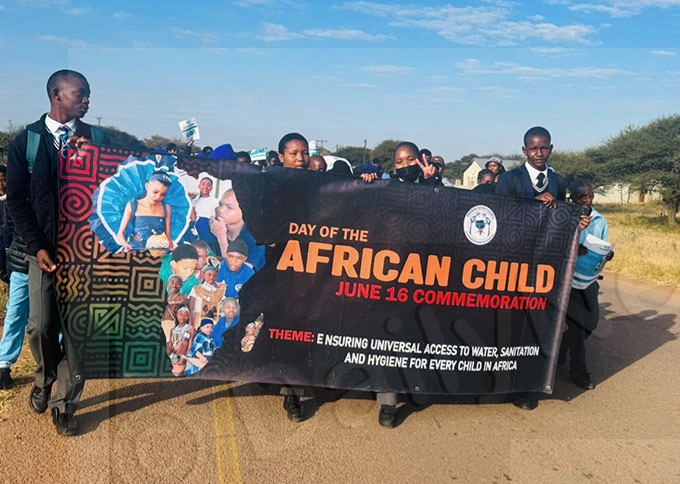
Learners commemorate Day of the African Child
18 Jun 2026
LESABO project to address water scarcity

18 Jun 2026