Vultures threatens existence
10 Mar 2016
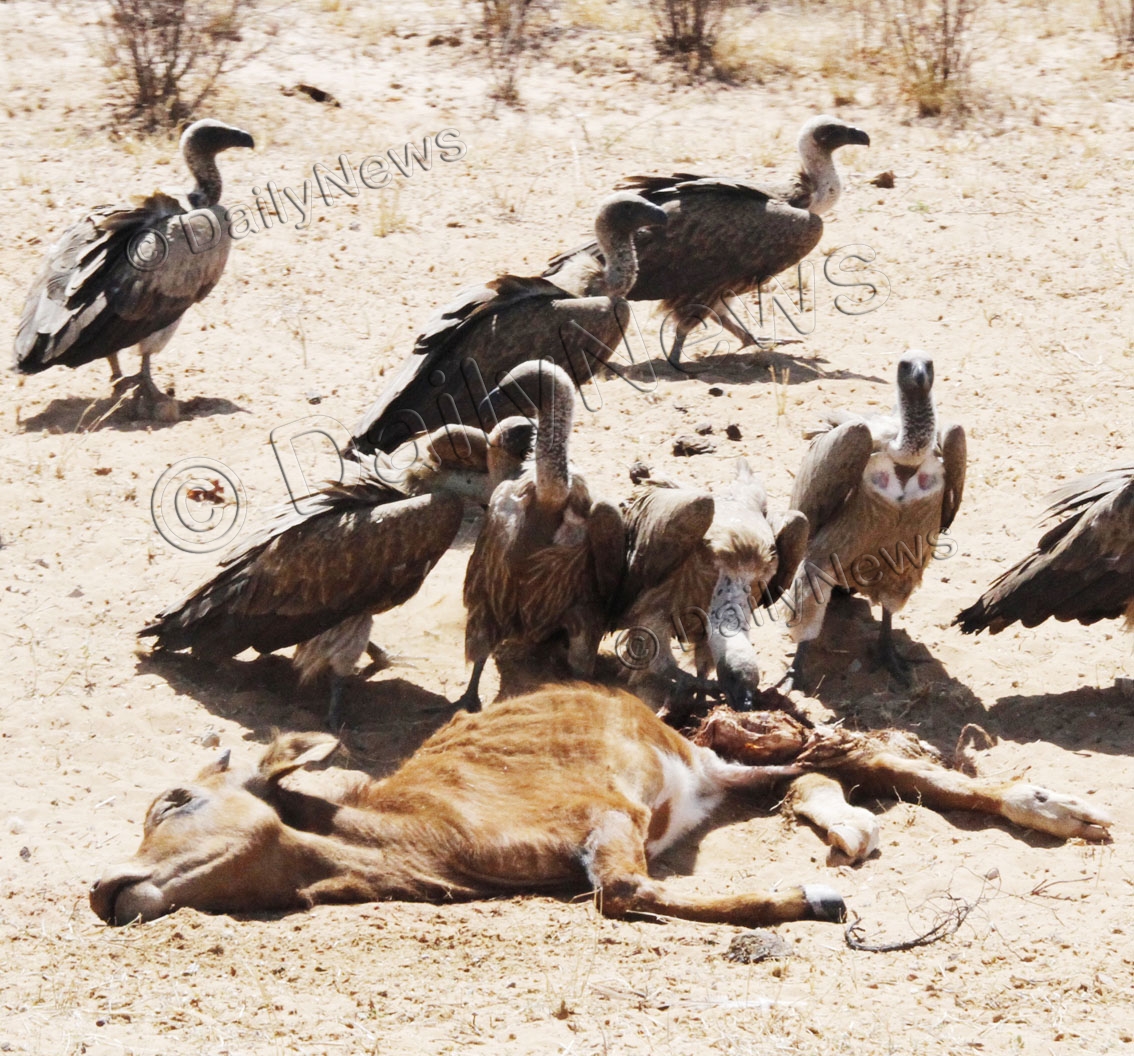
Wildlife Botswana director, Dr Kabelo Senyatso, says vultures are on the verge of extinction.
He said in an interview that vulture species and population across Africa and especially in Botswana had seen a significant decline in recent decades.
He said across the continent, the decline in the vulture species had gone down by 90 per cent.
In Botswana, the biggest cause for this decline was illegal and deliberate poisoning of the birds by poachers.
Dr Senyatso said some farmers also mistakenly poisoned them in an attempt to protect their livestock from mammalian carnivores such as wild dog, hyena and so forth.
Dr Senyatso said Bird Life Botswana estimated that at least 2 000 vultures were poisoned in, and just next to Botswana in 2013 adding that an estimated 400-600 vultures were poisoned around the Chobe National Park.
He said the drastic reduction in the number of vultures was alarming as vultures played a vital role in the functioning and diversity of Botswana’s ecosystem.
He said in the light of the significant potential for one poisoning incident to kill vast number of wildlife, especially endangered and vulnerable species, the penalties should be increased to reflect the gravity of the crime.
For example, the penalty for hunting by poison might carry a penalty similar to that for the illegal killing of a rhinoceros, which was the harshest penalised offense contained in the Wildlife Conservation and National Parks (WCNP) Act, carrying a fine of P100 000 and a term of imprisonment for 15 years.
The most directly relevant statute concerning the poisoning of vultures and other wildlife in the (WCNP) Act stated that the crime was punishable by a fine of P1000 and imprisonment for one year.
However, this punishment did not adequately reflect the destructive effect that even one poisoning incident can have.
In the meantime, Dr Senyatso noted so far ecotourism which includes bird watching in Botswana has created roughly 50 000 jobs for locals generating about P8 billion into the economy.
He said Bird watching as a global business is estimated at US$ 80 billion a year.
“Botswana has much to gain economically from protecting birds at risk such as the vultures,” he said.
He said Botswana was home to five major vulture species of the 23 species found on earth, however, each of the five species is globally threatened.
He said protecting Botswana’s vultures was a key factor in developing and strengthening the country’s economy as the loss of these species would severely hamper its marketability to bird and eco-tourists.
Meanwhile, during the World Wildlife Day celebrations held at Mmadinare under the theme ‘the future of wildlife is in our hands’ recently Dr Senyatso urged people to desist from killing vultures noting that eliminating the bird from the ecosystem will have a negative impact on nature and livelihood of the people.
He said to increase awareness and appreciate birds, Bird Life Botswana is working with children, inside and outside the classroom as well as sensitising the general public through platforms such as meetings and events about the value of birds.
He also said his organisation was working with adults, primarily those in remote villages where the majority of the country’s bird and wildlife populations still reside.
He said Bird Life Botswana was working towards quantifying the contribution of birds to Botswana’s own tourist sector.
“We are concurrently working towards building a network of birding routes, which we expect should significantly increase sustainable earnings from Botswana’s birding tourism.
It is very encouraging to note that in other countries where bird tourism has taken off, the returns have been considerable.
For example in 1997, between US$13-27 million was earned from local and international bird tourism in South Africa,” he said. Ends
Source : BOPA
Author : Gaone Busang
Location : Selebi Phikwe
Event : Interview
Date : 10 Mar 2016
Related News

18 Jun 2026

18 Jun 2026
Learners commemorate Day of the African Child

18 Jun 2026
LESABO project to address water scarcity

18 Jun 2026