

Falcon abatement project fruitful
03 Feb 2016
Quelea birds have turned out to be Pandamatenga farmers’ worst enemy.
In 2013, the birds reportedly caused between 60–90 per cent damage to fields in the area.
Speaking during an interview recently, a farmer in Pandamatenga, Mr Jacob Van Der Westhuizen, said the falcon bird abatement pilot project was 95 per cent efficient than the methods he used previously.
“We own 1 000 by 900 hectare farm and we used to use people and tractors to chase the Quelea birds away but this was not as viable as compared to the usage of falcons,” he indicated
The sorghum and cowpeas farmer said falcons were the only method of prevention he practiced against the troublesome Quelea birds.
The falconer, he said, would visit his farm every day, either early morning or late afternoon till the sorghum was dry enough and ready for harvesting.
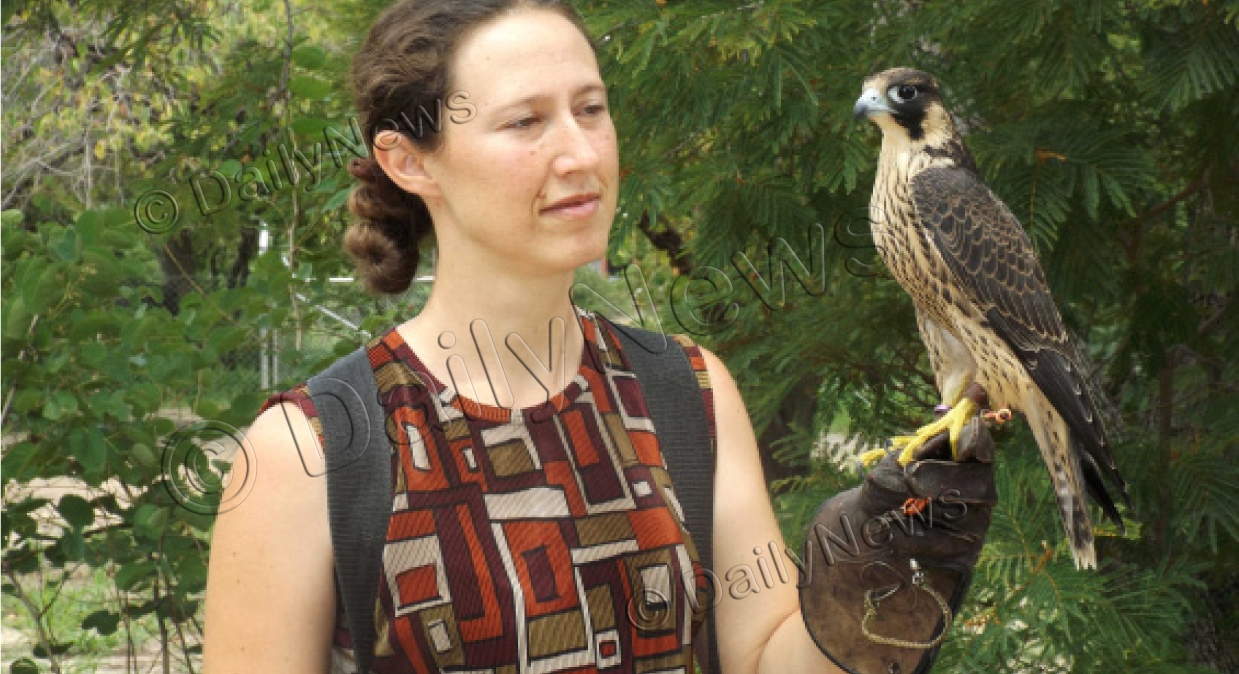
Master falconer, Ms Megan Stewart said during a trial research in 2013, the introduction of falcon bird abatement proved to be highly effective.
“Quelea birds flock in millions and any noted reduction is a huge difference,” she explained.
She said two types of species were trained to perform the act of chasing Quelea birds from fields, namely the Lanner and the Peregrine.
Ms Stewart said, despite the falcon being a natural predator bird, the 16 that she had in her enclosure were trained over a period of two months.
“We train them to chase and not to kill and so we feed them frozen Quelea, which we import from South Africa,” she stated.
She disclosed that she acquired all of her falcons in South Africa.
Ms Stewart said the previous methods used such as smoking and loud noise by farmers was not conducive to the environment.
She said she noticed that this caused potential predators to Quelea birds to stay far from the fields, which she said was similar to adding fuel to fire.
Furthermore, she noted that she was in a three-year contract that would allow her to cover the whole Pandamatenga farms.
According to a website called Airstrike Bird Control, Falconry is a natural technique that is part of the balance of nature and that it is chemical-free and non-polluting.
The site further states that Falconry works because pest birds are ‘hard-wired’ to be terrified of Raptors (falcons and hawks), which are their natural enemies.
It added that pest birds never get acclimated to Raptors, while they would adapt to noisemakers such as propane cannons, shotguns, or recorded calls.
An agronomy officer in the Ministry of Agriculture, Mr Micheal Matsila, said the pilot project benefited the fields located on the eastern side of Pandamatenga and it had now been approved for the whole area.
He noted that Quelea birds normally appeared in February till June annually.
“Sorghum and millet are the mostly damaged crops by the birds but with the falcon bird abatement project, the falcons are able to keep them away up until the crops are ready to be harvested,” he highlighted. ENDS
Source : BOPA
Author : Yolanda Nkonjera
Location : Pandamatenga
Event : Farming Project
Date : 03 Feb 2016
Related News

21 Jun 2026



18 Jun 2026
Commission targets youth empowerment

18 Jun 2026
Countries commit to partnership

18 Jun 2026