

HIV free nation is possible - PHK
28 Apr 2013
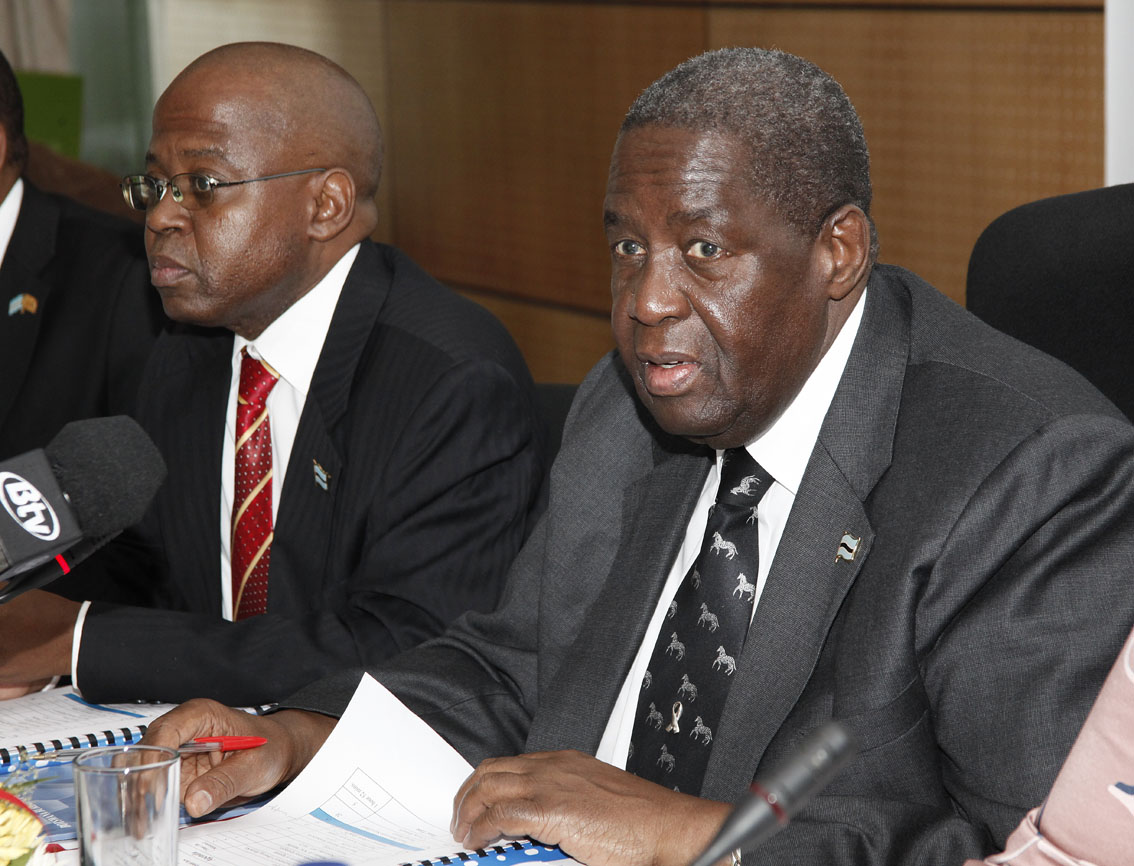
Vice President Dr Ponatshego Kedikilwe says the nation should remain optimistic that an AIDS-free generation is possible.
Speaking at the National AIDS Council in Gaborone on April 25, he said with a mother to child transmission rate that has dropped from 40 per cent to three per cent and ARV uptake of up to 95 per cent and projected national incidence rate of one per cent in 2011, the nation can be optimistic.
“Such optimism is further cemented by seemingly plummeting infections among the youth,” he said.
The Vice President noted that the prevalence of HIV among 15-19 year old pregnant women dropped from 22.8 per cent in 2003 to 10 per cent in 2011, while at the national population level, HIV prevalence dropped from 6.5 per cent in 2004 to 3.7 per cent.
Dr Kedikilwe pointed out that having achieved good results through the ARV programme and other interventions like Community Home Based Care and PMTCT, the world was looking at Botswana with keen interest to bring new ideas and interventions.
Commenting on the UNAIDS State of the Epidemic Global Report, the Vice President said in terms of the magnitude of change in HIV infection rates, Botswana has one of the highest changes in Africa.
He noted that between 2001 and 2011, the percentage drop in HIV incidence was 71, second to Malawi with 72, while Swaziland and Kenya recorded 37 and 32 respectively.
“As for AIDS related deaths, Botswana recorded the highest drop of 71, followed by Rwanda with 68 per cent and Zimbabwe at 61 per cent. South Africa recorded 27 per cent reduction during the same period.”
However, the Vice President expressed concern about the findings from a Botswana Youth Risk Behavioural Surveillance Survey that a good number of students admitted to having used drugs such as snuff, ecstasy, cocaine and marijuana.
He highlighted that only 55 per cent of the surveyed students reported to have used a condom the first time they had sexual intercourse. He urged council members to reflect on these issues and fight the challenges as they have potential to reverse the gains made so far.
Dr Kedikilwe said the global world has expressed concern about the disparity between funding devoted to HIV and AIDS and the magnitude of the epidemic.
He said HIV budget that stands at P1.1 billion continues to be a developmental challenge.“It calls us to tighten our belts and use these resources efficiently and wisely,” he said.He called members to bridge the gap between exorbitant programme inputs and actual programme outcomes and to strengthen the efficiency with which more is done with less. ENDS
Source : BOPA
Author : Mmoniemang Motsamai
Location : Gaborone
Event : National AIDS Council
Date : 28 Apr 2013
Related News

21 Jun 2026

18 Jun 2026
Commission targets youth empowerment

18 Jun 2026
Countries commit to partnership

18 Jun 2026