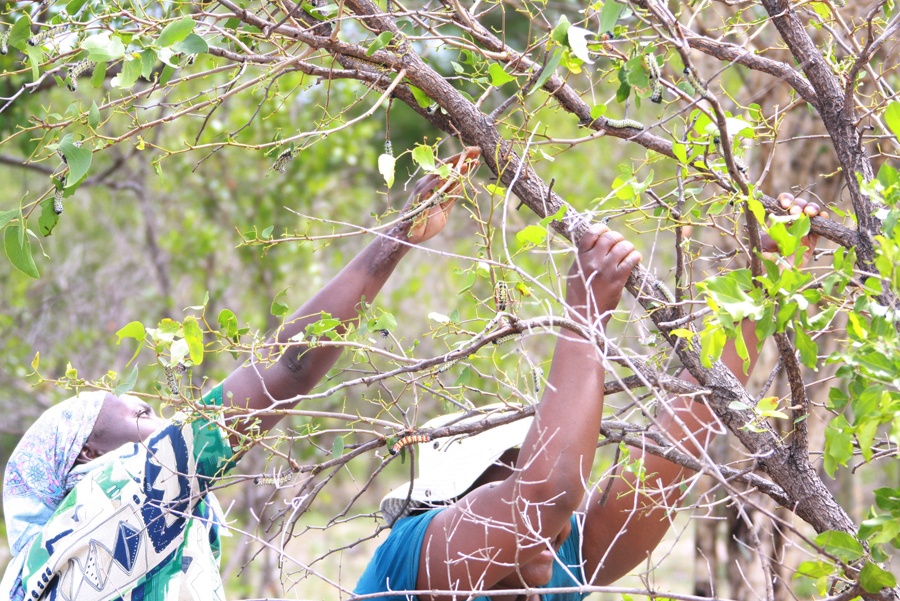
Harvesting phane on Christmas Day
28 Dec 2012
The cliché goes: a chicken never forgets the way home no matter the vastness of the area it covers whilst wandering around in search of food.
The same goes for Mahalapye-born, Mr Kago Phirinyane who never used to spend Christmas Day away from his family no matter how far he secured a “piece job.”
On that day, Mr Phirinyane would not go home empty handed as the moment he set foot at Mahalapye bus rank he would head straight for the shops to buy groceries for his family, taking home plastic bags full of Christmas delicacies.
He was often met with cheers and a warm welcome by his family and if there was tension or a misunderstanding between him and his wife, it instantly evaporated. However, the tables turned this time around and Mr Phirinyane found himself spending Christmas in the bush in the company of strangers eking out a living through harvesting phane to sustain his family.
Piece jobs were very rare this year and he recalled securing less than a handful of construction work. Socialised to be a family provider, he never dared to see his family starve or his children go to school in tattered school uniforms or bare foot, which was why he sacrificed spending Christmas Day with his family to ensure that his role as a father and husband did not suffer despite the circumstances.
It has been three weeks since he left the comfort of his home to sleep in a shack made of plastics at a camp near Tamasane junction along the A1 road. As the saying goes “the early bird catches the fattest worm,” Mr Phirinyane woke up in the wee hours of the morning to start harvesting phane before the scotching heat took effect on his skin.
He was usually back at his shack by afternoon preparing his harvest for the market. Unlike other harvesters, Mr Phirinyane was faced with the overwhelming work of harvesting; cooking, drying and selling all by himself since there were no extra hands to help.
One might think bush life was simple and inexpensive but that was not so; apparently it was more expensive than city life because harvesters were forced to buy food and water on a daily basis. The only difference was that people who thronged the camp to sell the harvesters food and water did not accept cash but rather the hard earned phane in exchange for such items.
The harvesters parted with 10 one litre Chibuku cartons full of phane on a daily basis, which was more expensive than one could imagine. People from neighbouring villages did not bother risking their lives to camp for days in the bush harvesting phane, but pounce on those who did with such basic necessities as water and food in return for phane.
Mr Phirinyane said he was looking forward to going home beginning of January where he would sell his phane and go to bed with a broad smile knowing that his family was well taken care of. ENDS
Source : BOPA
Author : Kgotsofalang Botsang
Location : Tamasane
Event : interview
Date : 28 Dec 2012
Related News
04 Aug 2026



03 Aug 2026
De Beers output surges in 2026 first-half

03 Aug 2026