


Diary farming daunting business
24 Feb 2015
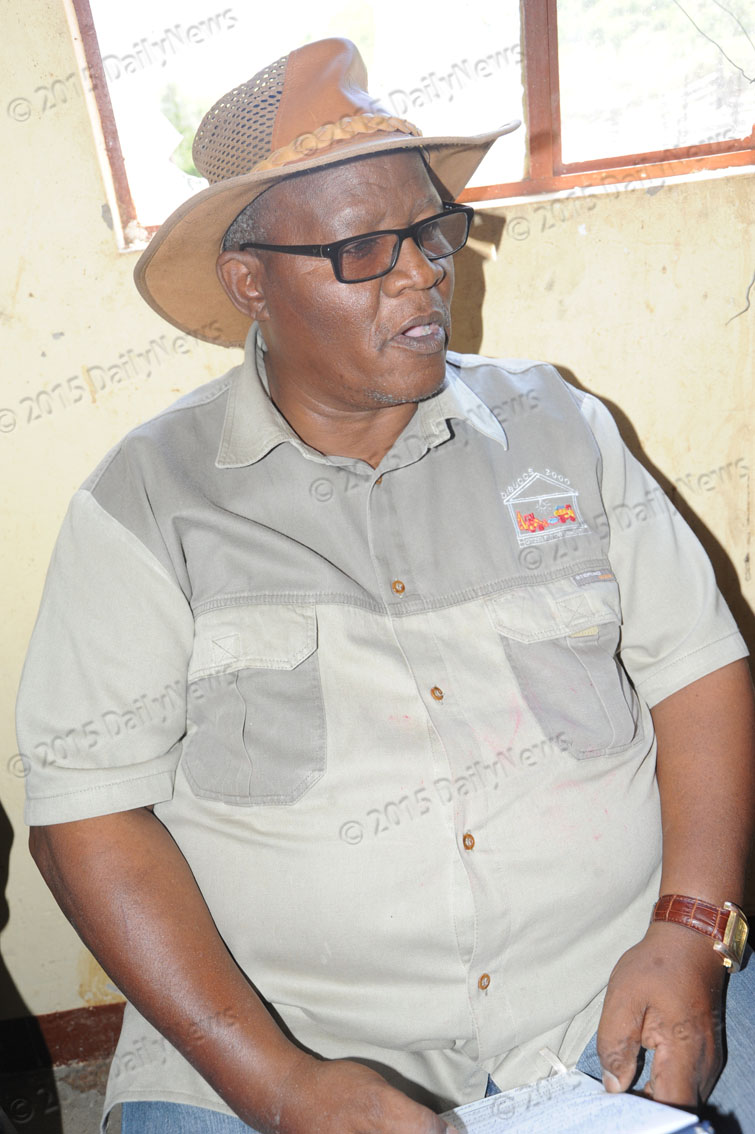
Dairy farming is the most challenging sub sector in the country’s agricultural industry despite being part of agriculture for thousands of years. When Mr Solomon Diphoko decided to change from his well-paying job – Civil Engineer to become a farmer, to be specific, a dairy farmer, probably he did not anticipate the challenges associated with his new trade.
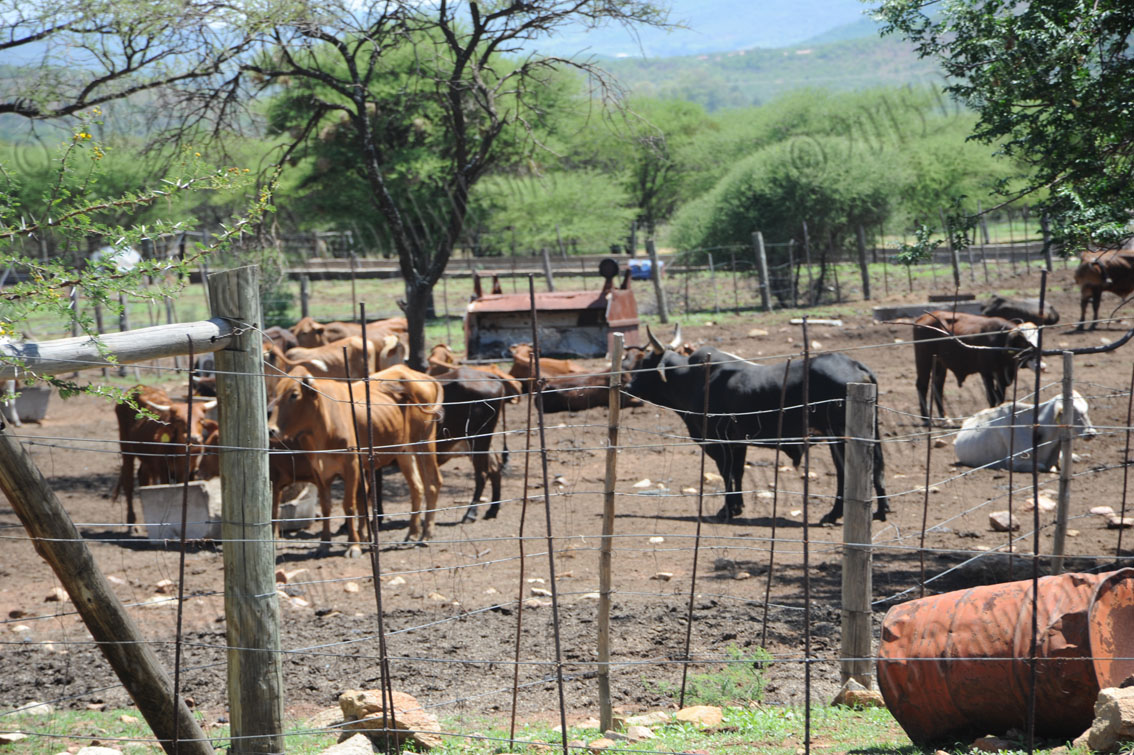
Mr Diphoko acquired a 30 hectare farm, not far from Lobatse called Reitfontein to start his dairy business. Conventional wisdom teaches us that most dairy farming activities are done around villages and cities where there is lack of grazing land.
Reitfontein is a high level elevated grassland area, ideal for dairy farming. The 30 hector plot is two kilometers from BMC Tannery on the façade of one of the high lands of Reitfontein.
The environment appeared cozy, green mahogany trees, bushy thick forest of native plants which produced the clean and crispy smell of rain that resembled mountain air, making the area appear like a low level valley.
Reitfontein in Afrikaans could mean a “garden” situated in an elevated area.Mr Diphoko was unwavering about what his intuition led him to be, one could detect from his voice when he speaks, a real farmer of decades.
There is no doubt that when he changed his career from Civil Engineering to be a farmer no amount of suffering could break his determination. He said he had looked at the fact that Botswana produced milk at low scale.
According to Mr Diphoko the passion for farming led him to pay Botswana Power Corporation (BPC) an undisclosed large amount of money to connect electricity to his farm. He bought a borehole and medication for animals with the belief that hard work pays.
His business progressed smoothly until he came to the realisation that milk produced in Botswana was valued less by processors meaning low profit placing the farm to be in no position to cover up for expenses incurred during the commencement of the company.
“The processors dictate to us, they grade our milk poorly depriving us of business. This is not fair; milk is milk and has one colour,” he said. “This pains me as I thought through hard work I would recover the money I invested into this business,” said Mr Diphoko.
Some reasons that he said led to the decline of the business are rising of prices for dairy feed and poor infrastructure such as roads leading to the farm.
“All these demoralize one’s interest to proceed with the efforts to rear dairy beasts. I don’t call this business, a Dairy Farm company anymore because it has collapsed, but rather a Beef Farm,” he said.
Mr Diphoko paints a gloomy picture of Dairy farming in Botswana, noting that as long as Batswana were not involved in processing companies, there was no future. He called upon the government to take a firm stand and assist dairy farmers to have their own milk processing companies.
He says the Ministry of Agriculture normally organises courses to educate them about taking care of Dairy cattle but resolutions and strategies taken were never implemented.
Mr Diphoko says it is wrong for the Ministry of Agriculture to take officials for benchmarking outside the country when farmers who are hands on are left out. “It is good for us to go there and see for ourselves and interact with advanced dairy farmers, this will allow us to make contacts,” he says.
He however urges farmers not to despair but to continue with the little they have while calling on the government to re-implement the Financial Assistance Policy (FAP) which he hailed for supporting Batswana financially then, saying that if re-defined it can help Batswana.
For his part Mr Frans Lindie Viljoen, who is the Chairman of the Dairy Farmers Association in Botswana also says government does not assist dairy farmers properly as compared to other sectors in the agricultural industry.
He however says there are opportunities in the dairy industry if one goes an extra mile. He says some members of the association are comparatively successful farmers because they have invested a lot in the sector.
Mr Viljoen started his business in 2002 with two jersey cows and now he has 150 cows which consist of brown swiss, Friesian, Asyre and simmentaller. He said his association has written to government suggesting how the dairy industry could be improved but up to now he is still waiting for response.
Mr Viljoen concurs with Mr Diphoko that prices offered by the processors are not satisfactory, noting that cost for producing milk in Botswana double that of South Africa due to transport costs and unavailability of land.
Mr Viljoen says some few years back Botswana used to produce more than 12 million liters of milk, with some producing more than 7000 liters a day. The advent of Foot and Mouth Disease in the northern part of the country and other resultant effects sent the dairy industry tumbling.
“We could not import feed; hundreds of cows died of hunger and the management by then tried to get compensation from the government without any success,” he said.
Mr Viljoen says in addition to lack of implementation of strategies by the Ministry of Agriculture (MOA), high cost feed, lack of land to operate from, lack of required medication for animals, high cost of transportation to import grass, lack of communication from dairy sector in Ministry of Agriculture and non-implentation of minimum of milk farm gate price also compound the whole process.
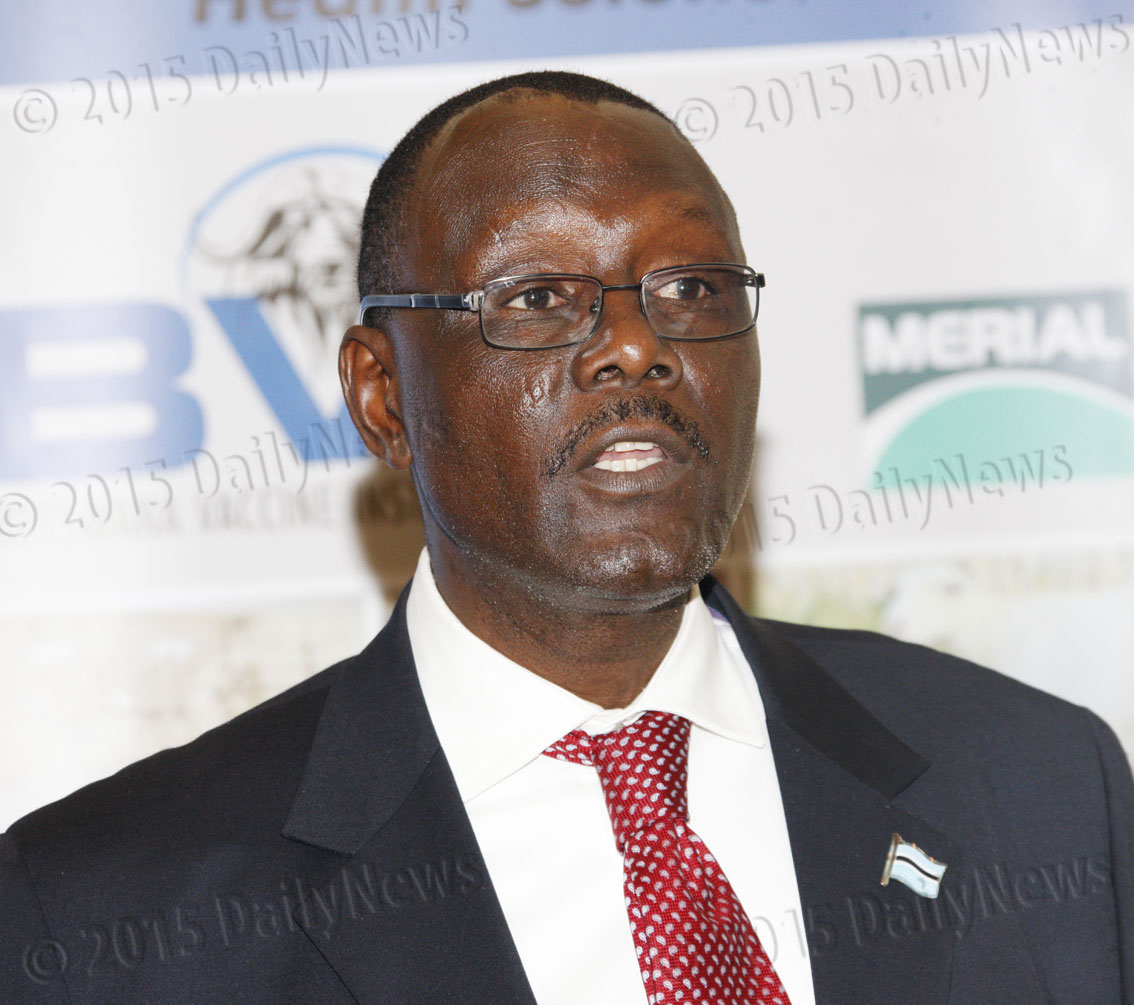
Answering some of the issues raised by farmers the Director of Animal Health in the ministry of agriculture Dr Phillemon Motsu said government could not compensate farmers for loss during foot and mouth disease outbreak, but that compensation would be done for farmers whose cattle were actually killed.
On why it takes time to implement strategies after training farmers Dr Motsu said training farmers in Dairy production practices is part of implementing the strategy. Unlike farmers Dr Motsu sees a bright future for Dairy Production in Botswana. Commenting on the assistance rendered to farmers so far by the government, he said the government has collaborated with other stakeholders to implement the Dairy Development Strategy in order to develop the Dairy sector in the country.
He said dairy farmers buy sexed semen from government at a 50 per cent subsidy; buy medicine for their animals from LACs at subsidized rates, that government has built milk processing plants for dairy farmers and that milk is bought from them by the government to supply government institutions.
As for what farmers termed low prices offered by processors, Dr Motsu said there is no price control in the country and prices for more commodities including milk are determined by market forces.
He said as the cost for running a dairy farm in the country is relatively high, prices that farmers get from processors may not be that adequate. Dr Motsu cited some challenges faced by dairy farmers as lack of policy to guide development of dairy industry, inadequate supply of veterinary requisites, lack of technical know-how among both dairy extension staff and farmers, frequent droughts and unfavourable climate conditions such as high temperatures that adversely affect milk production by exotic breeds.
Clover Botswana however says it does not relegate milk produced in Botswana to any lower grading but gives priority to locally produced milk before any milk is imported.
Clover Botswana General Manager Mr Mike Joyner says local milk is no less than 10 per cent of his company’s daily milk requirements. Mr Joyner says Clover Botswana strives to develop the local market for dairy product to ensure that ample opportunity exists for potential new dairy farmers that want to enter into the production of milk in Botswana.
However, he says all types of milk must comply with the legal specification of quality and hygiene, noting that milk is tested for butterfat and protein levels, PH level, anti-biotic, total bacteria, water content and somatic cell count.
Mr Joyner says the biggest disparity of milk produced in Botswana as compared to milk produced in South Africa is the limited volumes of milk produced in Botswana versus South Africa. He said Clover Botswana in its strategic drive to increase local milk production, however pays Botswana dairy farmers a milk price premium to compensate for higher input costs.
Parmalat Botswana concurs with Clover that at the moment there is a small quantity of milk produced in Botswana in comparison to the demand. As a result Parmalat Botswana source its milk from South African farmers against the same quality strict and hygienic standards used internationally and National standards of Botswana. ENDS
Source : BOPA
Author : Idah Basimane
Location : Gaborone
Event : Interview
Date : 24 Feb 2015
Related News


03 Aug 2026
De Beers output surges in 2026 first-half

03 Aug 2026
VP urges investors to bet on startups



30 Jul 2026