


Botswana leads on capital accounting
11 Feb 2015
Botswana leads Africa on Natural Capital Accounting (NCA) and the country recognises the impact of natural heritage in terms of the social and economic well-being of the nation.
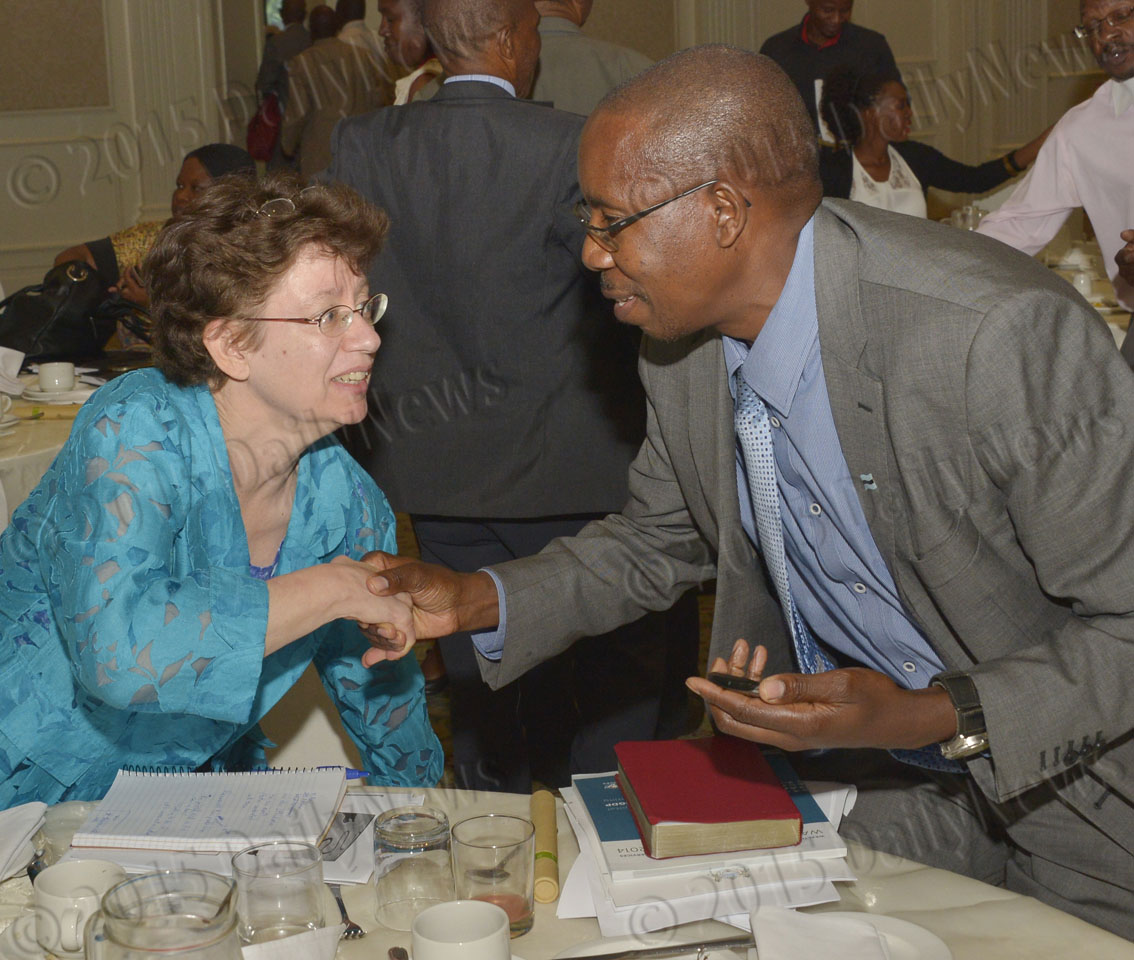
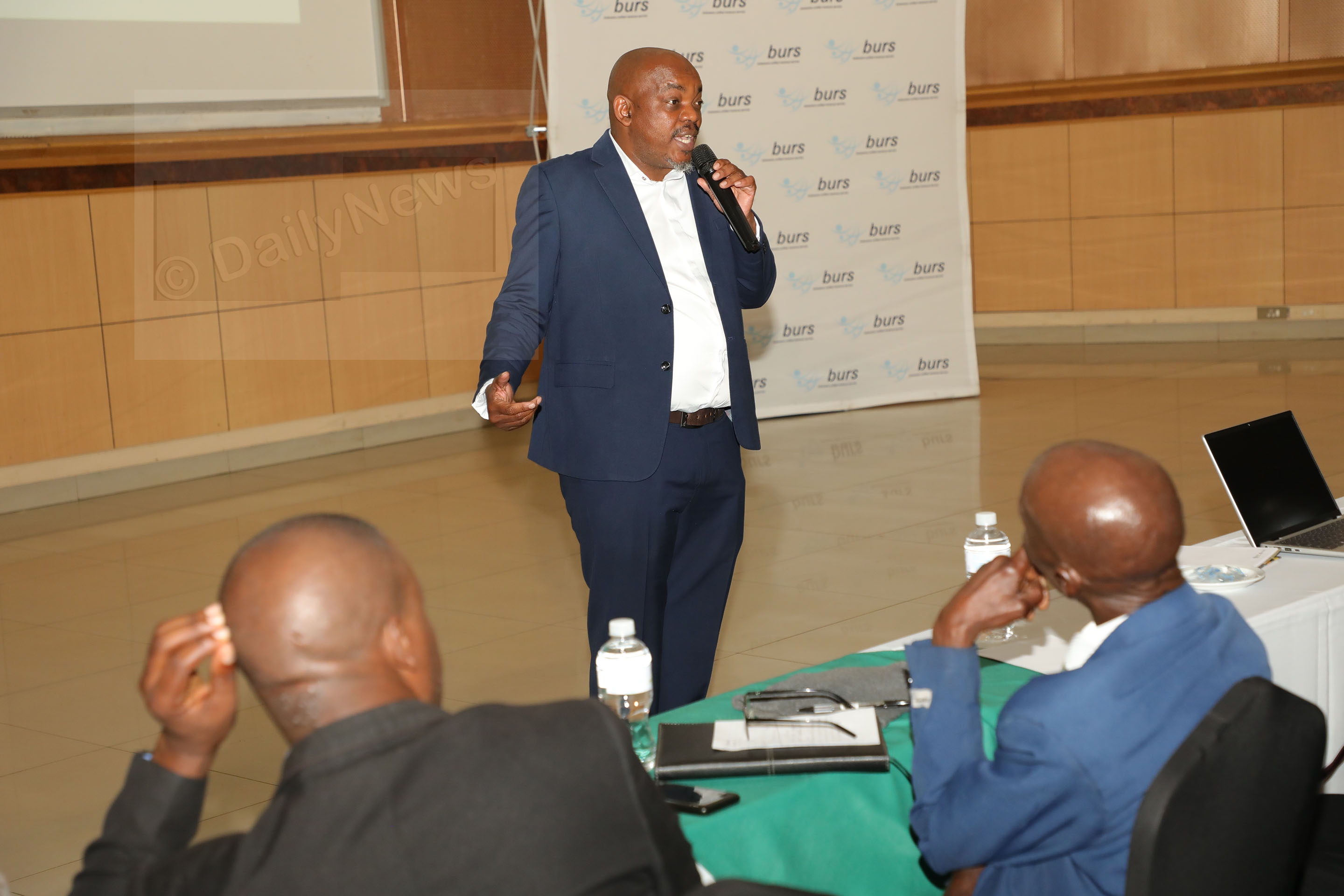
Permanent secretary in the Ministry of Minerals, Energy and Water Resources, Mr Kgomotso Abi said this at the high level sensitisation breakfast meeting on WAVES in Gaborone on February 10 .
WAVES is a global partnership that aims to mainstream natural capital in development planning and national economic accounts in support of sustainable development.
“We take pride in the way we’ve managed our natural capital. Of course people know about our diamond, copper and tourism. So, as a country, really it makes a lot of sense for us to be in the lead in terms of Wealth Accounting and the Valuation of Ecosystem Services (WAVES),” he added.
Mr Abi said recognising the effort that Botswana had done so far in terms of WAVES, the NCA in Botswana “is led from the very top. It is something that has been approved by cabinet. It’s something that our President Lt Gen. Seretse Khama Ian Khama drives with passion.”
Natural Capacity Accounting, Mr Abi said helps to bring together information on how natural resources were contributing to the economy, information on natural capital stocks and flows, uses and users, scarcities and potentials to help improve development decisions. Thus Botswana, Mr Abi said was very much alive to the need for NCA, adding that WAVES was one of the initiatives in that effort.
This, he said was also why in 2012 the country hosted the Gaborone Declaration on Sustainability for Africa and the subsequent one in 2013, adding that Botswana must be alive to NCA, because of its heavy dependence on natural resources, climate change and land productivity deterioration.
These three factors, Mr Abi said, “Should actually focus our minds to say we cannot just go on as business as usual, something must change and that’s where now NCA and the WAVES programme that we are currently pursuing came in to assist us.
This, is because in as much as we can say our GDP is healthy, we are a middle income country. But, the real worth really is what the ecosystem gives us. So, we need to know how much we have in terms of the stocks and the flows, so it is very important that this WAVES programme, we see it in a larger sense.”
Even though the NCA involves; water accounts, mineral accounts and energy accounts, he said the Ministry of Minerals, Energy and Water Resource only coordinates, as this was a multi-stakeholder effort and the ministry could never succeed trying to go it alone.
He stressed on the need to have multi stakeholder grouping at the formative stages hence the inclusion of ministries of Agriculture, Environment, Wildlife and Tourism and Statistics Botswana.
Mr Arbi cited as a critical issue the fact that Botswana was so dependent on natural resources, hence the need for the country not to lose sight of intergenerational equity.
“When we talk minerals, we know that minerals at the end of the day will get depleted, but we must invest the proceeds of the minerals in sustainable industries, such that in the long term we actually indirectly make mining sustainable,” he said.
At some point, he said Botswana’s diamond resources would deplete and this did not mean that the day the last diamond mine was closed in Botswana that would be the end of it.
The country, he said still needed to keep the industry in terms of the downstream side, therefore when issues of NCA were discussed, discussions are beyond the core industry. “It’s the supporting industry that will make or break us as well,” he added.
In terms of the National Steering Committee, Mr Abi said the Committee had approved the National Plan, which he said focused on some of the following areas; water, macroeconomic indicators, energy to do the account.
“We need to recognise a few areas where we need to focus on, collect the necessary data that will inform our policy formulation and in terms of our national planning,” he said.
The permanent secretary said, “We have to see not just through the NDP11 process, even beyond the Vision 2016. Even when we plan in terms of our work programme, we should look beyond just a six year plan. “
Institutionalisation of WAVES, Mr Abi said was very critical, because the programme has to be maintained for the long-term, and it was also important that units were established within ministries that would run with the programme.
At his ministry, Mr Abi said part of the new Department of Water Affairs would have a unit that works with the NAC, to ensure maintenance and sustenance of the programme.
The Ministry had also developed a training programme in Botswana, where institutions like the University of Botswana would offer training on NCA, he added.
This, he said was to ensure that during training people should not just become consumers of the knowledge but as well contribute to the body of knowledge.
Mr Abi noted that over time they wanted to have a centre of excellence in terms of NCA, in Botswana, so that in future they could influence the direction of NCA and be part of the formulation of the path to the future, regarding NCA.
The core implementing countries of WAVES, include developing countries such as, Botswana, Columbia, Costa Rica, Guatemala, Indonesia, Madagascar, Phillippines and Rwanda.
WAVES also partnered with UN agencies such as, UNEP, UNDP and the UN Statistical Commission which are helping to implement NCA. The programme is funded by a multi-donor trust fund and is overseen by a steering committee. ENDS
Source : BOPA
Author : BOPA
Location : GABORONE
Event : Breakfast Meeting
Date : 11 Feb 2015
Related News

03 Aug 2026
De Beers output surges in 2026 first-half
03 Aug 2026
VP urges investors to bet on startups

30 Jul 2026