


Fynn promotes new range management concept
09 Sep 2014
Ngamiland farmers have been urged to try new rangeland management strategies aimed to greatly improve the productivity and profitability of their ranches.
The concept behind range management was said to be ideal for rural farmers or those developing new ranches and could not afford massive financial outlays on fencing, and also for improving livestock production.
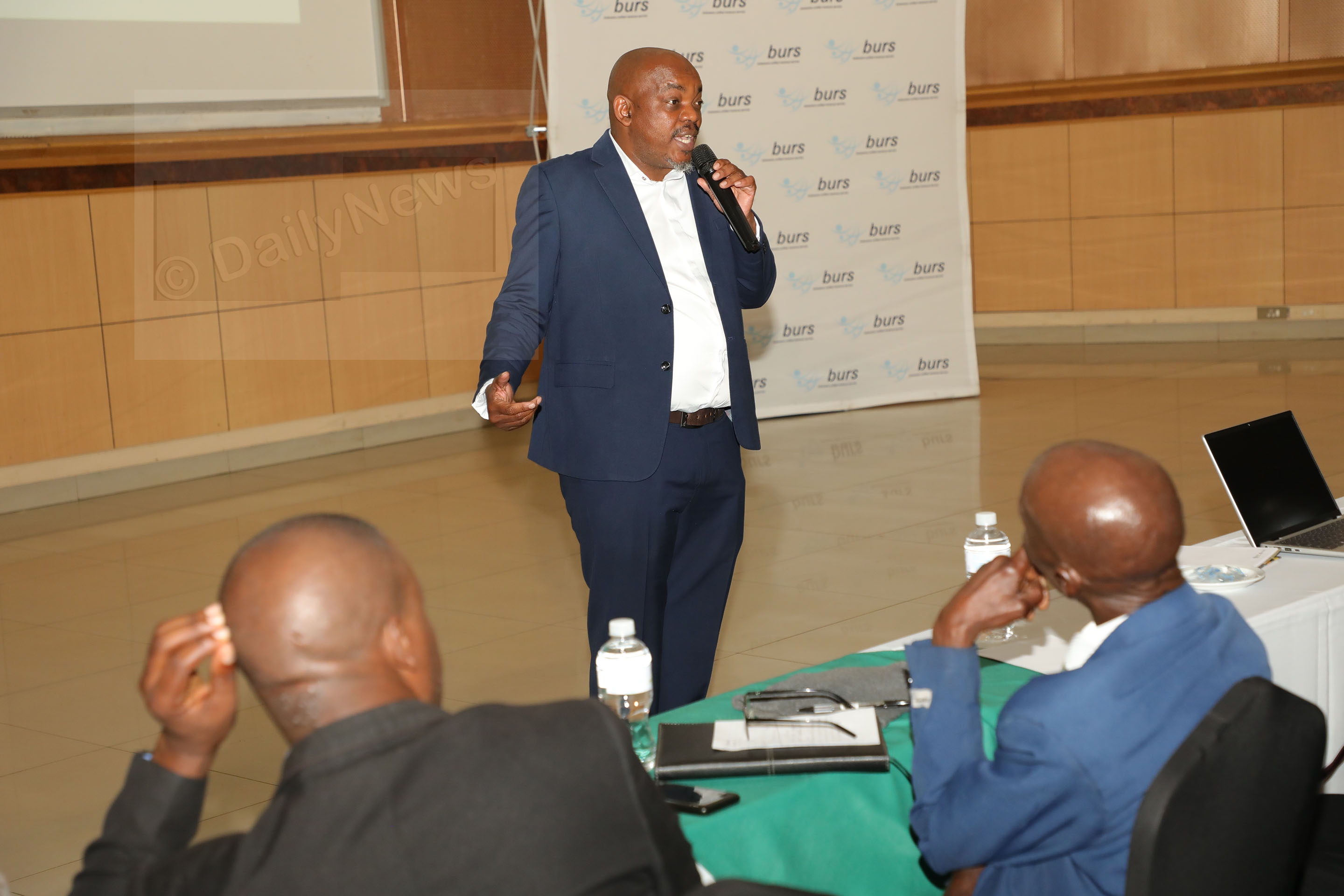
Speaking during a one-day workshop to discuss the concept behind range management, new rangeland management strategies and their implementation, Dr Richard Fynn, a rangeland ecologist from Okavango Research Institute said the concept did not need more land but only management.
He said the strategies involved practicing rotational grazing systems. ”Taking the theory and practice together, we are seeing the rise of optimal ranch management strategies that are achieving great success in South Africa and Namibia,” he added.
Dr Fynn said since the strategies had proved to be effective, he found it fit to teach and empower local farmers to greatly improve the productivity and profitability of their ranches, noting that would seed the beginnings of great progress in livestock management and productivity in Botswana.
He said undertaken both locally and in collaboration with international range ecologists, it could lead to important advancements on optimal strategies for rangeland management that improve livestock production and profitability that includes range improvement.
“If you have a ranch which produces less grass, you can keep fewer cattle and if you multiply grass production it means you have to increase the number of cattle,” he said.
Dr Fynn informed farmers that productive grass requires long rest and recovery periods after grazing adding that there was need to reserve one paddock within the ranch which could rests for a period of a year.
Explaining the types of grasses, he said the annual grasses have weak roots system that cannot access deep soil moisture and only survive for three months in the wet season and then die while the perennial grasses are very nutritious for the cattle.
The grasses are said to have long roots and could survive in dry and wet seasons, hence the need to ensure that cattle have access to optimal quality of forage.
He said farmers had to concentrate cattle on half of the ranch during wet seasons to enable a full grazing season recovery period and to obtain maximum grass production and ensuring optimal quality forage for cattle.
For their part, farmers welcomed the new concept but requested the institute to identify one ranch and conduct a pilot project so that they could benchmark.
They observed that their region is unique and has many challenges in terms of vegetation due to low and unreliable rainfall. They said theoretically, the strategy seems fruitful but practically it is impossible.
One farmer, Mr Gabriel Moloi said due to human/wildlife conflict, the concept has become impossible in some Hainaveld farms. He noted that lions terrorize them and this has reduced free movement of cattle despite their efforts to divide ranches into paddocks.
Mr Moloi called on the institute to conduct a research that could address challenges faced by Hainaveld farmers so that they could benefit from the new rangeland management strategies.
Another farmer, Mr Keloitsang Ledimo also requested the institute to bring the concept closer to farmers’ hearts so that they could appreciate its implementation.
He said if funds permit, the institute could liaise with farmers to identify one ranch where they could demonstrate the concept. ENDS
Source : BOPA
Author : Esther Mmolai
Location : MAUN
Event : Range management workshop
Date : 09 Sep 2014
Related News


03 Aug 2026
De Beers output surges in 2026 first-half

03 Aug 2026
VP urges investors to bet on startups


30 Jul 2026