


Economic diversification Are we there yet
04 Sep 2014
A Diamond is forever; this is a popular De Beers slogan.
For Botswana, however, diamonds are not forever as there could come a time when diamonds are no longer available underground or it would no longer be profitable to mine them. It is now an open secret that time is running out and thge country's vulnerable economy has to be diversified.
The discussions on economic diversification started as early as independence days when there was need to diversify from agriculture which was the backbone of the economy before the discovery of diamonds.
At independence, agriculture played a major role in the economy and as Professor Brothers Malema from the University of Botswana’s Department of Economics said, mining accounted for two per cent at independence, but reached a peak of 46.7 per cent in 2003.
Professor Malema and other economic experts and academics converged at Lansmore Hotel for a two day discussion on the topic, Are Diamonds there forever? – Prospects of a Sustainable Development Model for Botswana.
It was evident from the presentations that the mining share of the GDP has been declining since 2009, and the analysts were however, divided on whether the economy has diversified and on the areas to diversify to.
For Professor Malema, the economy is not yet diversified and agriculture remains the key sector for economic diversification, saying however, drought frustrated government’s efforts.
He believes that if the sector was properly developed, unemployment would not be this high (Lewis Dual Sector Model).
Professor Malema says the market for agriculture products was already available, adding technical knowledge was not a challenge.
Further, he said, Batswana invested outside the country, more than what foreigners invested in the local economy, thus creating an imbalance.
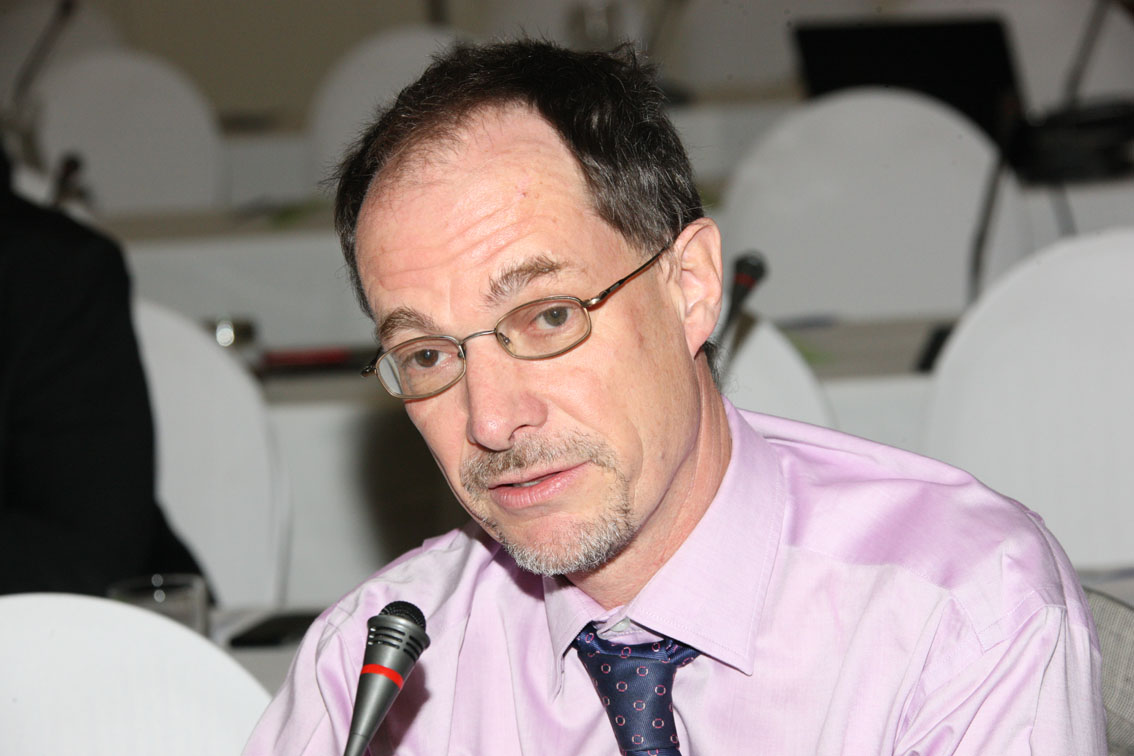
However, Dr Keith Jeffries, Managing Director of Econsult, said government has spent vast amounts of funds in different schemes all geared towards improving agriculture, but there has not been major improvements and therefore, it cannot help diversify the economy.
Some of the schemes that come to mind are ALDEP and ARAP.
He said the sector has resisted all efforts and it does not make sense to put more resources in a sector that has failed.
Dr Jeffries said the cattle industry has restricted modernization and said, privatizing the Botswana Meat Commission (BMC) and ending its monopoly was the solution.
However, Professor Malema said it was not about how much money has been invested in agriculture, but how it was used.
He further said he was against privatization of public enterprises as that only benefit the few at the expense of the majority. He said public enterprises can still be run efficiently.
Meanwhile, Dr Jeffries said there have been concerns about conventional mineral economy dependence, limited job creation and a Dutch Disease which squeezed non-mining tradeable sectors.
In his presentation on what worked and what did not in efforts to diversify the economy, he said there is no single agreed definition of diversification, but focus is on sustainability and improvement of living standards. Diversification is also measured through the structure of GDP growth and source of growth and sectoral diversification.
Further, it is measured through export diversification and employment, poverty and income distribution.
Different schemes, policies and parastatals have been established and along the way, new ones have been established. Amongst the new policies are the citizen economic empowerment policy and the economic diversification drive.
To Dr Jeffries, the economy is diversified and non-mining GDP has changed from agriculture and manufacturing to services.
In other words, the services sector has been growing while agriculture and manufacturing have been taking the opposite route.
However, the catch is, mining no longer drives growth but growth is declining.
Something has to change due to government activities and popular expectations built around higher revenues than will be sustainable in future. The problem is, expectations have not changed.
Non-mining exports have been squeezed and the nation still depends on diamonds. Dr Jeffries said mining exports far than its share of the GDP and the bottom question line is, has the country reached its diversification goal?
As things stand, the country is faced with challenges of unemployment, income inequality and poverty, and this could be an indication that the country has not yet reached its goal.ENDS
Source : BOPA
Author : Tebagano Ntshole
Location : GABORONE
Event : Economic analysis
Date : 04 Sep 2014
Related News

03 Aug 2026
De Beers output surges in 2026 first-half

03 Aug 2026
VP urges investors to bet on startups


30 Jul 2026