Ministry decision to boost dairy sector
26 Jun 2014
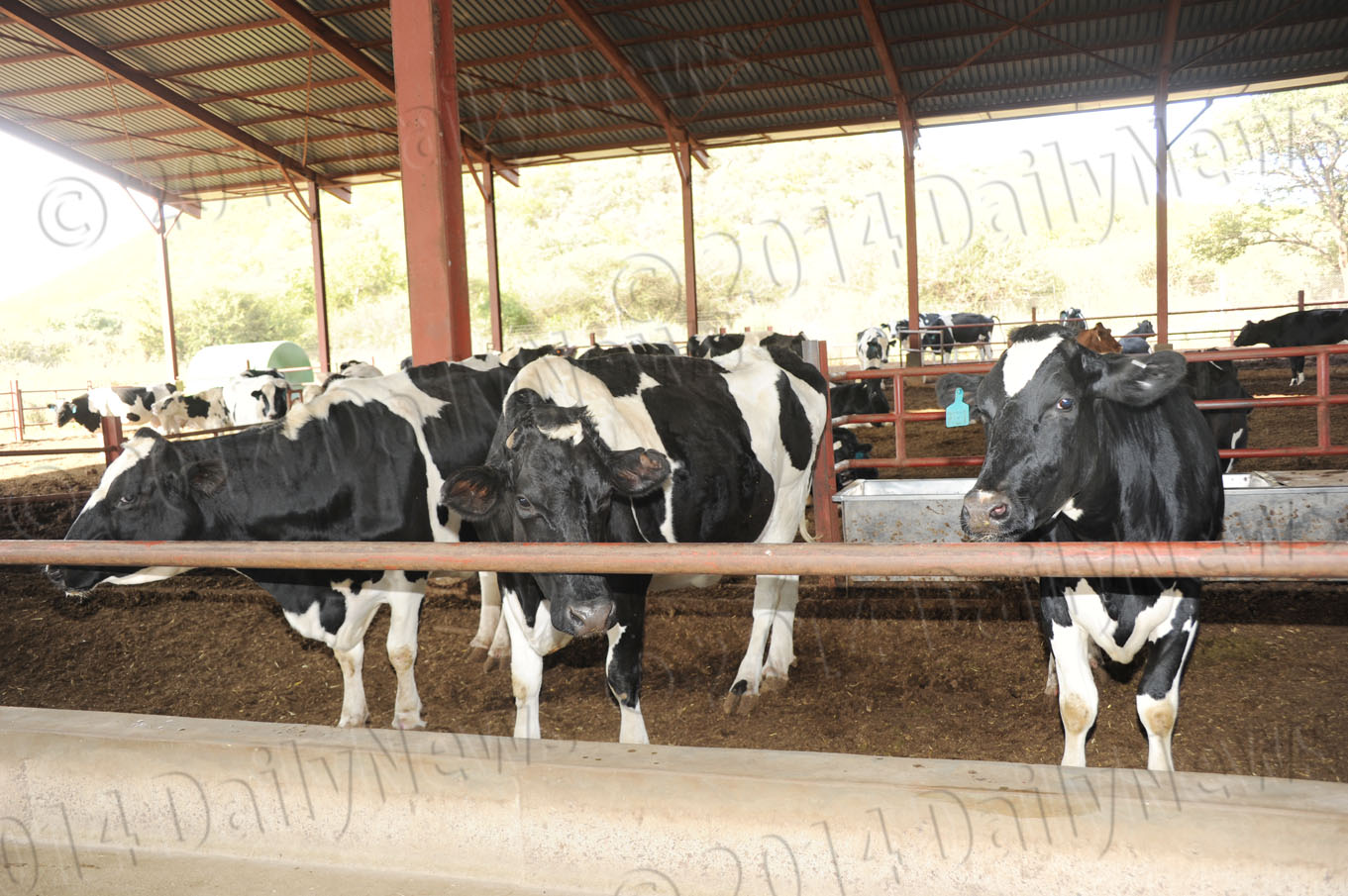
In an effort to improve the performance of the dairy sector, government will from September provide semen for dairy cattle and improve the availability of dairy feeds.
Implementation of the dairy strategy will include providing sexed semen to farmers through artificial insemination and improving the availability of diary feeds.
The Assistant Minister of Agriculture, Mr Oreeditse Molebatsi recently revealed that the dairy sector has failed to meet local demand, which stands at 60 million litres per year.
He revealed that only 5 million litres of milk was produced locally while the remaining 55 million litres was sourced from neighbouring South Africa.
“This shortage presents a business opportunity for locals to take advantage and produce milk for the country. We encourage farmers to venture into diary production,” said Mr Molebatsi.
He further revealed that the sexed semen would be available starting September and would be imported from outside the country. Additionally, Mr Molebatsi said the dairy strategy would also improve marketing and infrastructure development in the dairy sector.
On other issues, the Assistant Minister revealed that because of the good response from farmers during this year’s ploughing season, government has a backlog of payments for tractor owners who ploughed for farmers.
He said the delay in payment was initially occasioned by the fact that the ministry had exhausted the ISPAAD vote and had to source funds from other votes. “Thereafter, the challenge has been with the Government Accounting and Budgeting System (GABS) payment system.
We are very sorry for this delay and we are doing the best we can to make sure that payments are made as soon as possible and also to avoid such delays in future,” he said.
He also revealed that with the current payment system, once a receipt has been entered into the database it would not have to be re-entered again the next time the recipients are paid unless they have changed names, accounts or addresses.
On other challenges in crop production, Mr Molebatsi expressed concern about quelea birds and pests such as the fruit fly. He said about 205 quelea bird colonies were identified of which 117 were controlled while the rest absconded.
He also revealed that nine specimen of fruit fly were recorded in the country including the South East District which so far has been free of the disease. ENDS
Source : BOPA
Author : Kabo Keaketswe
Location : GABORONE
Event : Press briefing
Date : 26 Jun 2014
Related News
04 Aug 2026


03 Aug 2026
De Beers output surges in 2026 first-half

03 Aug 2026