

Tobacco bill in the offing
25 Feb 2013
Government is drafting a tobacco control bill, which will be in line with the World Health Organisation’s (WHO) framework convention on Tobacco Control (FCTC).
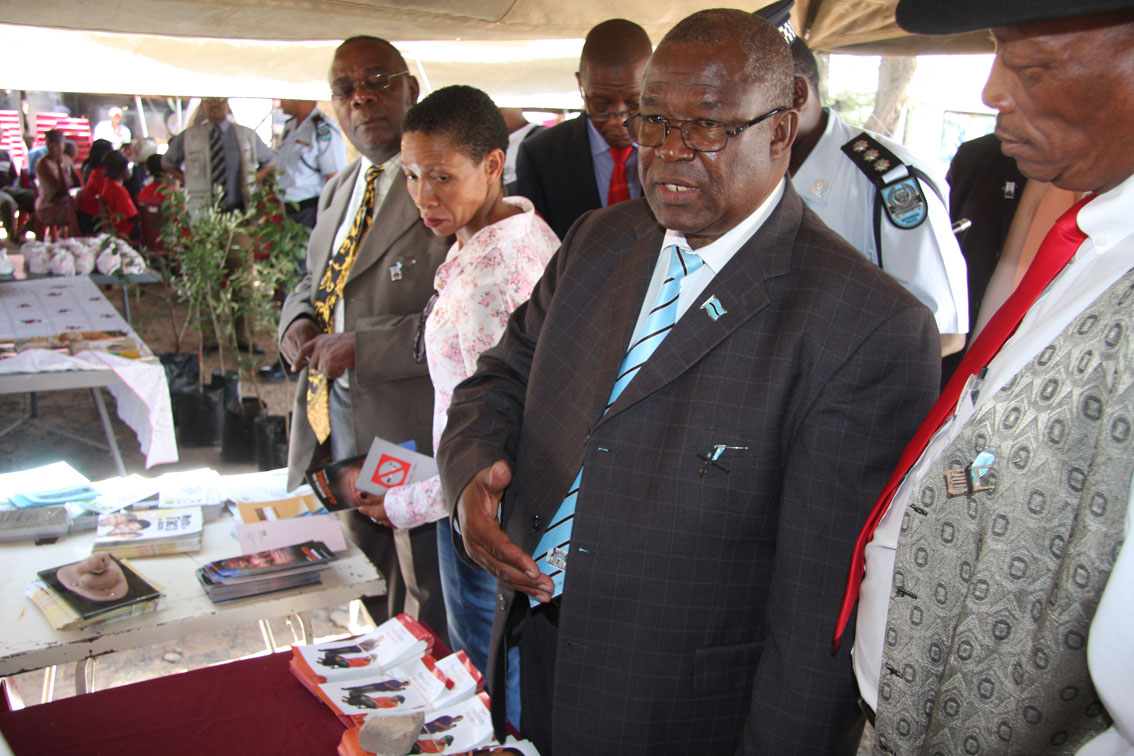
Speaking at the SADC healthy lifestyle day in Ghanzi, health minister, Dr John Seakgosing said data showed that non-communicable diseases were rapidly increasing in the SADC region.
Dr Seakgosing stated that the SADC healthy lifestyle day was meant to reinforce the message that non-communicable diseases were largely preventable.
“This means that the number of deaths from non-communicable diseases can be reduced by following a healthy lifestyle,” he said.
The SADC healthy lifestyle day was adopted after the decision of the African Union (AU) executive council meeting of July 2008. The event is held every last Friday of February each year and it was the second time Botswana commemorated it.
With the theme of this year’s celebration titled: Risk Factors of Today are Tomorrow’s Diseases, Dr Seakgosing said the driving force of this year’s commemoration was to educate people about non-communicable disease risk factor
“Cardiovascular disease, cancer, chronic respiratory diseases and diabetes have been cited as leading causes of mortality in SADC,” he said.
He indicated that people can choose to adopt healthy lifestyles such as nutrition and healthy eating, fitness and physical activity, no smoking, stress management and responsible alcohol consumption to prevent non-communicable diseases.
“We will continue to empower communities with the necessary knowledge and education programmes on substance abuse, life skills, healthy eating and nutrition, physical activity, health promotion, peer education, reproductive health and primary health,” he said.
Minister Seakgosing said his ministry supported the SADC healthy lifestyle day and would continue to work with stakeholders in creating partnerships for prevention and control of non-communicable diseases.
For his part, Dr Eugene Nyarko, the Resident WHO representative, said non-communicable diseases were generally slow in developing and were often discovered late when they had already done a lot of damage.
“Many times the diseases work in combination. You often find somebody who has hypertension and diabetes at the same time, especially older people although the numbers are growing in younger adults,” he said.
Dr Nyarko said WHO statistics estimated that non-communicable diseases killed three out of five people in the world, which translated into approximately 36 million deaths annually, representing 63 per cent of all deaths worldwide.
Approximately, he said, 16 million of these deaths (45 per cent) involved people below the 70 years and 90 per cent of these deaths occurred in middle-and low-income countries.
“WHO further projects that over the next 10 years, non-communicable diseases’ deaths globally will increase by about 17 per cent and the greatest increase will be seen in Africa (27 per cent) and the Eastern Mediterranean region (25 per cent),” said the WHO representative.
He said WHO and the entire United Nations system were ready to support all health related efforts and in particular case, non-communicable diseases prevention and control efforts. ENDS
Source : BOPA
Author : Omphile Ntakhwana
Location : Ghanzi
Event : SADC Healthy Lifestyle Day
Date : 25 Feb 2013
Related News

21 Jun 2026



18 Jun 2026
Commission targets youth empowerment

18 Jun 2026
Countries commit to partnership

18 Jun 2026