Determination works for Masogo

12 May 2014
Business opportunities exist, even in the poorest part of a country, because people always have demand for goods and services.
In areas that are undeveloped, entrepreneurship is viewed as an important component in stimulating economic growth, innovation, competitiveness, and even alleviating poverty.
However, before that is accomplished, there are several unique features that affect entrepreneurship in developing areas, the distinct aspects that inhibit entrepreneurship such as, the lack of capital and financial innovation.
Many people in these areas have limited personal savings and lack the necessary capital to start their own business therefore, face a challenge of getting financial assistance with expensive borrowing rates or end up using informal sources of finance to start their businesses.
Furthermore, are those that enable entrepreneurial activities and allow start-up businesses to be successful despite great odds, running several start-up businesses at one time for example, owning a farming business while at the same time be involved in a commodity business to generate income for the farming business. .
The chief for Gakuto village, Kgosi Abdul Letlamma affirmed that business is the best tool that could help people to upgrade their standard of living as it creates jobs and is a source of income for the owner.
Kgosi Letlamma urged his people to take advantage of the proximity of their village to the capital city Gaborone saying; they have a benefit of covering a wide range of customers.
In an interview, he said government has provided poverty eradication programs to help Batswana and that they should be encouraged to refrain from laziness.
Kgosi Letlamma said coming together and sharing ideas can be a stepping ladder to a brighter Botswana.
He appealed to his people to always attend kgotla meetings in large numbers stating that, kgotla is the only place where most information can be effectively disseminated and people be given a platform to express themselves.
Kgosi Letlamma added that, during kgotla meetings financial professionals from institutions like Citizen Entrepreneurship Development Agency (CEDA) are invited to come and inform people on certain financial matters.
“There are lots of challenges faced by entrepreneurs here, small market and lack of electricity are leading factors. These challenges usually lead to businesses such as, saloons being closed down as available customers eventually seek services in Gaborone,” Kgosi Letlamma said.
He further said, as the chieftaincy they advise more on the advertising strategy to help new and aspiring entrepreneurs so that they reach out to customers even outside the village.
Kgosi Letlamma commended those that got government assistance and their businesses still running adding that, during the deputy minister of Finance and Development Planning, Mr Vincent Seretse’s visit most of the productions were up to par.
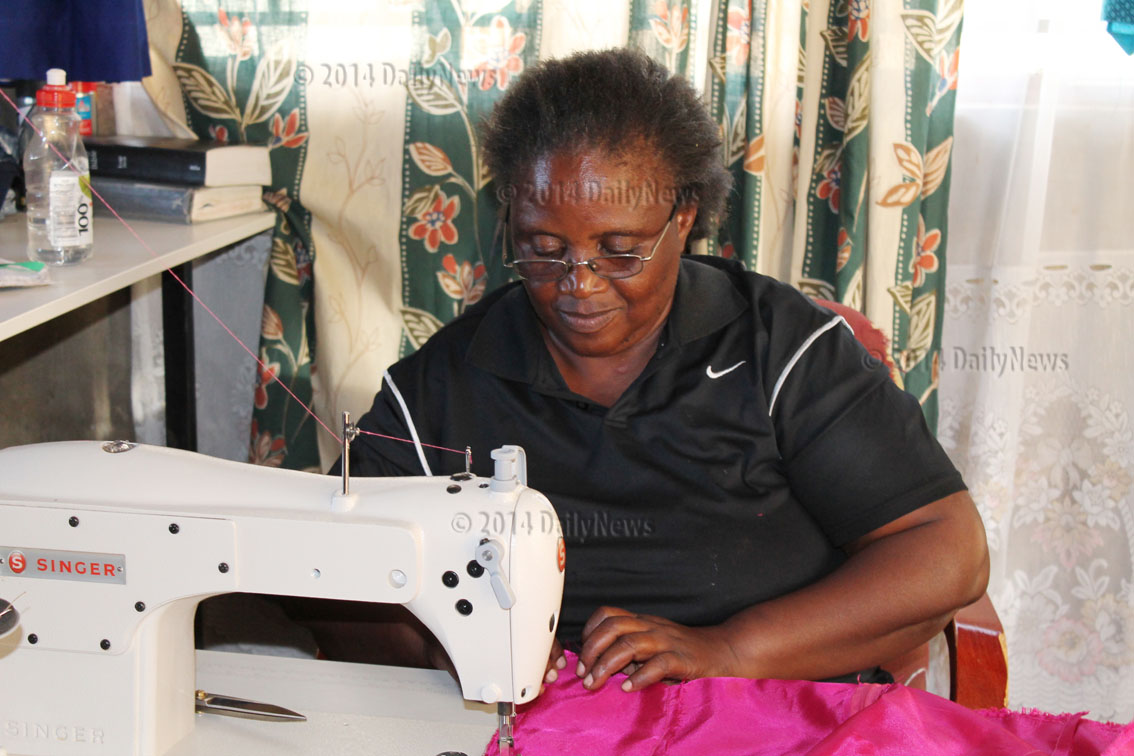
One of the beneficiaries of poverty eradication programs, 55-year-old Bosha Masoga of Boseja ward in Gakuto applauded the government for helping them in improving their lives through business.
Ms Masoga said through the government’s involvement she has a confirmation that being in or remaining in poverty is a choice.
She revealed that being raised in a family of hard workers and lack of advanced education compelled her to start a small business selling snacks to fend for her three children.
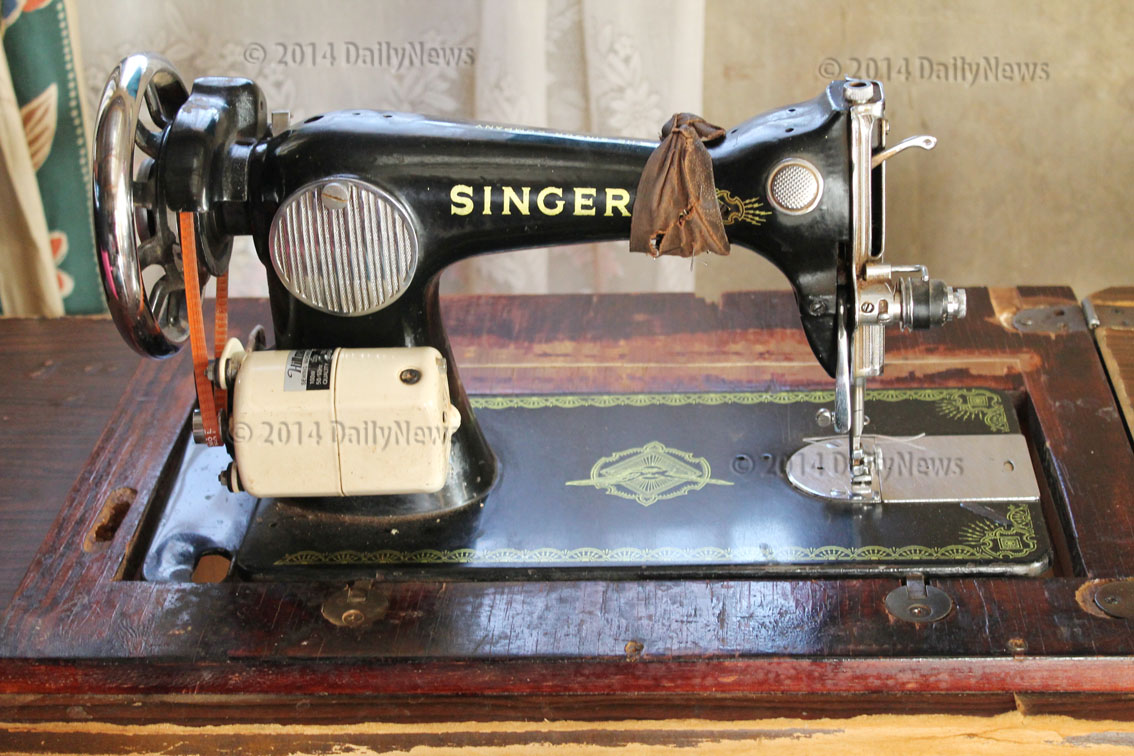
Ms Masoga said after selling snacks for so long she decided to grow her business in 2002 when she bought a second hand sewing machine valued at P300 with her savings.
The mother of three stated that though she knew nothing about sewing, she was dedicated to learn and that she was inspired by her neighbors who owned a sewing business in Mogoditshane where her hawking tuck-shop used to be.
“After buying that machine I asked the owner to show me how it works. It didn’t take me long to be able to run the wheel straight on the cloth. Everyday after selling my sweets I’ll come back in the evening and start practicing on it until people knew I had a machine and came one after another for their clothes to be fixed,” Ms Masoga said.
She further revealed that, even though she did not make a lot of money, she was able to buy uniforms and pay transport fees for her children who are now all independent.
Ms Masoga also disclosed that she also afforded to buy a plot and build a house with the profit she made from the textile business by just using a second hand machine.
Ms Masoga enlightened that competition did not intimidate her but rather helped her to improve.
“Business is not good in Gakuto. There are few customers and some of those few customers they place orders and don’t collect it while those that collect fail to pay me,” she expressed her distress.
She went on saying that she is being owed more than P3 000 and is planning to take legal action against those that owe her.
Ms Masoga is the chairperson in her cluster group, which involves other two ladies and they have started operating in February 2014 in a poverty eradication scheme.
She revealed that they have been assisted with a cutting table, P11 000 in cash, two straight machines, one buttonhole machine, four plastic chairs, an industrial iron and ironing board.
Ms Masoga said working as a group is not an easy task stating the fact that she has been managing her own business.
“We haven’t started drafting our constitution because we don’t have time and we are never all present,” she said.
She however raised laziness as one of the contributors that leads a lot of businesses to close.
She said she wants to see their group excelling and moving from a backyard in to an industrial plot.
“The president of Botswana has said that everything is money.
He said one can take a bottle and cover it with paper and make money out it.
The programs are there, Batswana should only avail themselves and benefit from these programs,” Ms Masoga said.
She concluded that women should take responsibility and make their own earnings rather than expecting to be taken care of by men.
“A respectable woman does not drink in the early hours and she uses her hands to bring bread on the table,” she concluded. ENDS
Source : BOPA
Author : Kenanao Mmopi
Location : MOLEPOLOLE
Event : Business feature
Date : 12 May 2014
Related News

04 Aug 2026



03 Aug 2026
De Beers output surges in 2026 first-half

03 Aug 2026