LEA resuscitates horticulture
24 Apr 2014
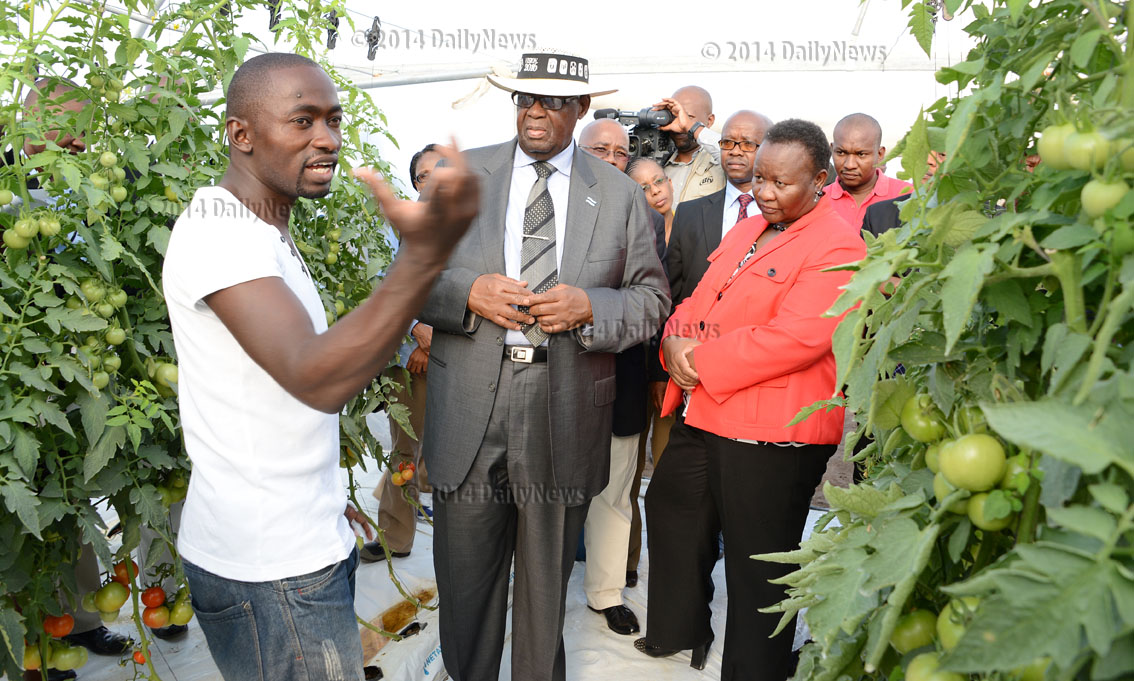
The Local Enterprise Authority’s (LEA) Glen Valley incubator facility produces about six per cent of the entire production of tomatoes in Botswana.
LEA chief executive officer, Dr Tebogo Matome said this when giving an overview of the incubator, during the Vice President, Dr Ponatshego Kedikilwe’s tour of the facility on April 23. However, since this was a training facility, Dr Matome said sometimes about a 100 tonnes of tomatoes went to waste.
“We were expecting 500 tonnes a year, but however we only got 384 tonnes during the 2012/2013 financial year. This is about six per cent of the entire production of this country,” he added.
He explained that initially they had thought of establishing seven incubators around Botswana, but due to the financial crunch they only managed to do four in 2007.
This, he said, was “a blessing in disguise, because having done all seven at the same time would have been a great problem for us.” Even though the Glen Valley incubator did come out the way it did, Dr Matome said there were two things, which they were not able to acquire, being the boiler and the seedling production facility.
The boiler, he said, was needed to be able to have production throughout the entire period- whether during winter or during summer. However, he said they did manage to find a way around that.
The seedling production facility, Dr Matome said, was quite critical, adding that they had agreed to try and put up a nursery for seedlings to address this challenge. These, he said were the two key challenges they experienced.
In terms of challenges regarding business development, he said sometimes clients do not keep the records that they required them to keep. He said this could be a challenge to the clients when they went out to look for funding to be able to do their businesses.
“But even from our perspective sometimes we have breakdowns as LEA, and we are able to sort those out,” he added. Another challenge, he said was the amount of money that clients were required to pay upfront in order for them to be enrolled in the incubator.
These fees, he said excluded certain cohorts of people from coming to the incubator- primarily those who do not have upfront start-up capital. To address this, he said they were thinking of converting the incubator into training with production centre in order to take up people for a period of one year.
By doing so, he said LEA would be able to train more people However, he said this was still debatable as some people “say maybe we should take people for two cropping season which is two years, so that they learn certain mistakes in the first year so that they are able to perfect in the second year, but, it is arguable."
LEA’s view, Dr Matome said, was that clients should come in for one year and be taught what was entailed in the different structures of horticulture- including tomatoes.
From there, at the end of the period, he said LEA would then share the profit with the clients - LEA taking 80 per cent and the client taking 20 per cent, “because the main aim is to be able to expose them to the different production techniques in horticulture and to teach them business management from that perspective.”BOPA
Source : BOPA
Author : Lorato Gaofise
Location : GABORONE
Event : VP tour of facility
Date : 24 Apr 2014
Related News
04 Aug 2026



03 Aug 2026
De Beers output surges in 2026 first-half

03 Aug 2026